
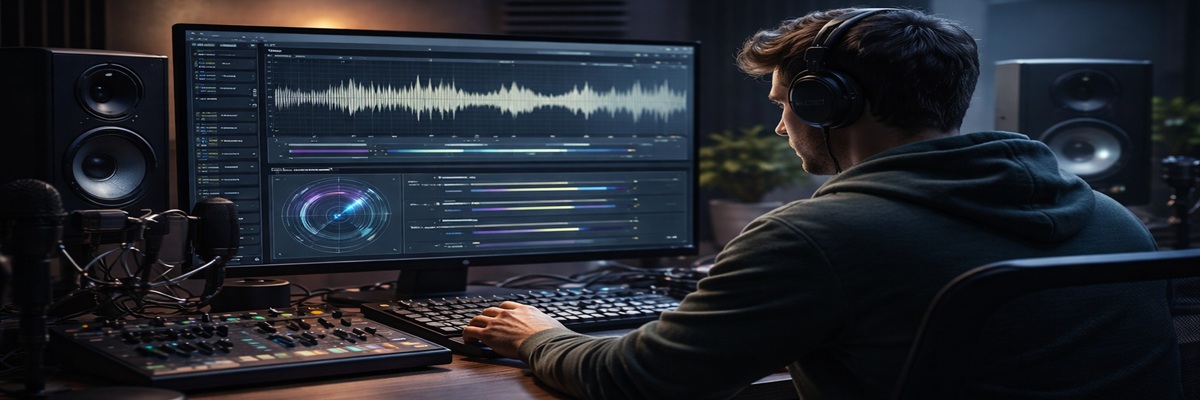
Adobe’s annual Max conference has become known for previewing experimental tools that may shape the future of creative work. One of the concepts that generated discussion in the audio and voice acting world was something Adobe called “Corrective AI.” The idea was simple but powerful. Instead of asking a voice actor to return to the studio to record new lines or emotional variations, editors could potentially adjust the emotional tone of an existing voice recording using artificial intelligence.
Although the technology was introduced some time ago as a sneak preview, it continues to come up in conversations about voice acting, audio production, and the growing role of AI in creative industries. For voice professionals in particular, the concept touches directly on the heart of their craft: performance.
What Adobe’s Corrective AI Does
Adobe’s Corrective AI was presented as a tool that could analyze a recorded voice performance and allow editors to modify aspects of the emotional delivery. In practice, this means a line originally recorded with a neutral tone could be adjusted to sound more excited, more serious, or more relaxed without bringing the actor back for a new recording session.
The system works by studying patterns in the voice recording and identifying cues that signal emotional tone. By altering those cues through machine learning models, the software attempts to reshape the delivery while preserving the original voice.
The goal is not to replace a performer but to provide editors with a way to correct small issues that appear during the editing process. If a line sounds slightly too calm for a dramatic moment, or too intense for a quieter scene, the software could theoretically shift the tone to better match the surrounding dialogue.
This concept fits into Adobe’s broader push to integrate AI tools into creative software. In recent years, the company has introduced AI powered features across video editing, image manipulation, and audio production.
Why the Tool Attracted Attention
For many people in the voice acting community, Corrective AI stood out because it directly touches the performance itself. Voice acting is not just about reading lines clearly. Actors carefully shape emotion, pacing, emphasis, and rhythm to deliver a believable performance.
When a tool claims it can alter emotional tone after the recording session is finished, it naturally raises questions about artistic control. The emotional choices that an actor makes in the booth are usually the result of collaboration with directors and writers. Changing those choices later in post production could potentially reshape the meaning of the performance.
At the same time, the concept also reflects a reality of modern production workflows. Dialogue often changes after recording sessions are completed. Scenes may be re edited, rewritten, or adjusted during development. When that happens, producers typically schedule “pickup sessions” where actors return to record additional lines or alternate deliveries.
Corrective AI was presented as a way to reduce some of those additional recording sessions by making small adjustments during editing.
How Corrective AI Could Be Used in Production
If tools like Corrective AI become widely available in professional workflows, their most practical use would likely be in small corrections rather than major performance changes.
In film, animation, and game development, editors often discover minor issues once a project moves into the post production stage. A line might feel slightly too energetic for a scene that was edited differently than originally planned. Another line might need a slightly more serious tone after changes to the story.
In those cases, the traditional solution is to schedule another recording session with the actor. While pickup sessions remain common, they can add time and cost to production schedules.
Corrective AI suggests a different approach. Editors could potentially make subtle adjustments to an existing recording to better match the scene. In theory, this could save time while preserving the actor’s original voice.
The technology could also be useful in areas such as podcast production, advertising, and corporate media, where small tonal adjustments might improve the flow of a final edit.
Still, even supporters of the technology tend to frame it as a correction tool rather than a full replacement for recording sessions.
What It Means for Voice Actors and the Future of AI Audio Tools
The larger conversation surrounding tools like Corrective AI is tied to the broader discussion about artificial intelligence in creative industries. Voice actors have already seen rapid development in AI systems that can generate synthetic voices or replicate speech patterns.
Corrective AI sits in a slightly different category because it modifies an existing human performance rather than generating a new voice from scratch. However, the core concern is similar. Many performers want clarity about how their recorded voices can be altered and how those alterations are approved.
Voice acting is built on performance choices. The way a line is delivered can change the meaning of a scene, the personality of a character, or the emotional response of an audience. Because of that, actors often view their recorded performance as a creative contribution that should not be heavily modified without collaboration.
At the same time, technology has always influenced how audio is edited and produced. Editors already adjust pacing, remove breaths, and manipulate recordings to improve clarity. Tools like Corrective AI could eventually become another part of that editing toolkit.
What remains clear is that technology cannot easily replicate the creative decisions that happen during a live performance session. Directors, writers, and actors work together to shape tone, timing, and emotional nuance in ways that software still struggles to recreate.
Corrective AI represents one more example of how production tools are evolving. It may offer editors new ways to refine recordings, but the core of voice acting remains rooted in human performance. The emotional choices that actors make in the booth continue to be the foundation of the final result that audiences hear.