
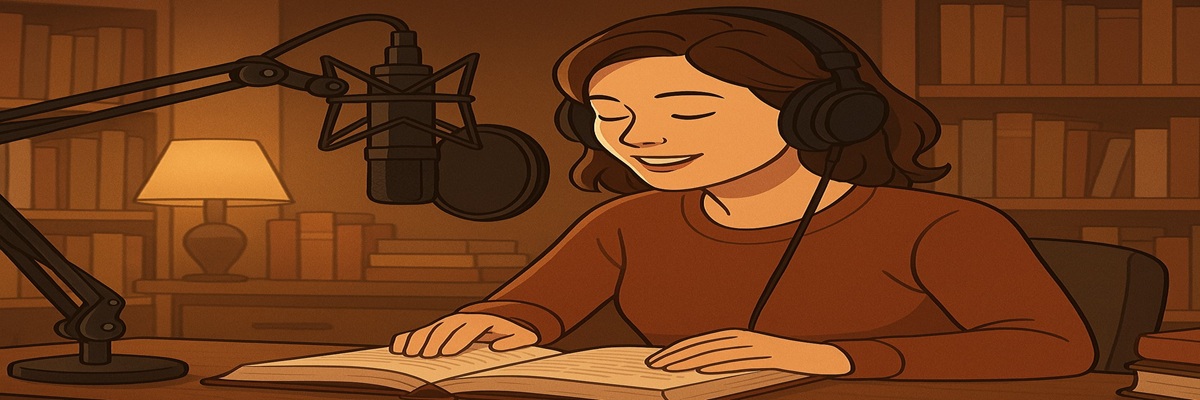
The Hidden Strength of Audiobook Work
For many voice actors, the pursuit of steady work can feel unpredictable. Commercials come in waves, animation projects take months to produce, and game contracts can end abruptly. But within that shifting landscape lies one of the most dependable and creatively fulfilling genres in the business of audiobook narration.
Audiobooks have quietly become a powerhouse in the voice industry. The global market continues to expand every year, with publishers investing heavily in quality narration to meet the demand for immersive storytelling. For performers who value consistency and longevity, audiobook work offers something rare: stability, artistry, and the chance to turn voice acting into a sustainable craft.
The journey of voice artist Wiley, who recently made headlines for her growing success in audiobook narration, reflects this shift. Like many actors who began in other corners of the voice world, she found in audiobooks a space that rewarded patience, preparation, and precision over instant recognition. It’s a world where reputation grows through consistency, one page, one chapter, one book at a time.
The Art and Discipline Behind Audiobook Narration
What sets audiobook narration apart is its quiet intensity. It demands a different skill set from commercial or animation work, less about punch and more about presence. A narrator carries the entire story alone, guiding listeners through dialogue, emotion, and rhythm without visual cues or supporting voices. That challenge is also its reward.
Top narrators like Bahni Turpin, Robin Miles, and Simon Vance have shown what mastery looks like in this field. Their performances are celebrated not for flashy delivery, but for control, texture, and the ability to disappear behind the story. They make listeners forget the performance and focus entirely on the words.
Audiobook narration is also about endurance. A single book can take days or weeks to record, requiring vocal consistency, emotional accuracy, and technical awareness from start to finish. A line recorded hours after another must sound identical in tone and intention. Narrators often say it feels like acting and marathon running combined; the mind stays focused while the voice carries the weight of the story.
This kind of discipline builds reliability, and reliability builds reputation. For many professionals, that consistency translates directly into repeat work. Publishers trust narrators who can deliver both artistry and punctuality.
Building Skill and Finding Opportunity
Success in audiobook narration rarely happens overnight. It’s a skill developed through study, reflection, and a lot of time behind the mic. Aspiring narrators often start by practicing with public-domain texts, recording at home, and refining their pacing and tone. The goal isn’t to sound dramatic; it’s to sound natural and clear enough to make listeners forget they’re being read to.
For those ready to grow further, there are excellent training programs and workshops offered by respected narrators, studios, and audiobook producers. These programs focus on storytelling, vocal health, and microphone technique, not as marketing tools, but as genuine craft education. Many veteran narrators also mentor newcomers, sharing insight on how to manage sessions, take direction, and build stamina for long projects.
Opportunities have also expanded beyond major publishers. With digital platforms, independent authors, and educational organizations producing more audio content than ever, skilled narrators are in constant demand. Remote recording has made the field more accessible, allowing professionals to work from their own studios with high-quality results.
Genres like self-help, romance, memoir, and science fiction all rely heavily on strong narrators who can bring tone and authenticity to the material. For those willing to adapt their voice to diverse subjects, the potential workload is extensive and steady.
Why Audiobooks Are the Long Game
In a profession where trends shift quickly, audiobook narration stands apart for its endurance. It rewards the long-term mindset of the performer who values refinement over recognition and quality over quantity. Each book builds credibility, each collaboration builds trust, and each voice session builds skill.
Narrators who specialize in this work often find themselves with ongoing partnerships with publishers and producers, creating a dependable stream of projects. Once a narrator proves capable of consistency, professionalism, and emotional depth, they become a go-to voice not just for one title, but for an entire catalog.
Financially, the field offers steady income potential that grows with experience. Veteran narrators often balance ongoing audiobook contracts with other voice projects, creating a sustainable mix of creative and financial stability.
Beyond income, audiobook work offers something else: legacy. A great narration can live for years, replayed by thousands of listeners long after the recording session ends. Few other voiceover genres offer that kind of enduring connection between performer and audience.
For many, that’s the true appeal. It’s not about fame, it’s about resonance. It’s about finding a voice that serves the story and knowing that your performance helps someone experience words in a new way.
In the ever-changing landscape of voiceover, audiobook narration remains one of the few paths that consistently rewards dedication, craft, and heart. For voice actors looking for more than fleeting gigs, it may just be the genre where their work and their voice are heard the longest.