
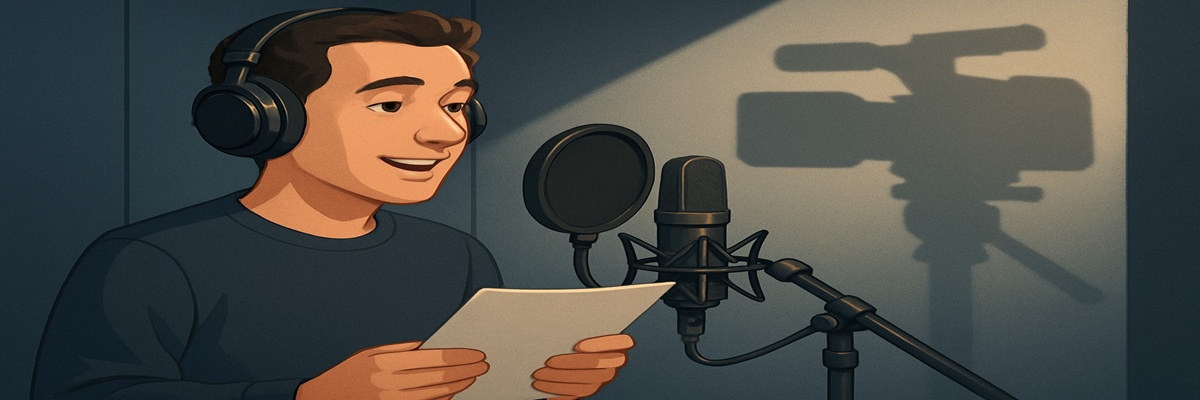
Stepping Into the Booth: A Mindset Overhaul
Transitioning from on-camera acting to voice acting isn’t just a minor tweak it’s a total mindset shift. On camera, you can rely on facial expressions, costumes, lighting, and body language. Voice acting strips all that away, demanding that everything emotion, character, nuance comes purely through your voice.
You become an “invisible actor,” painting vivid characters out of sound alone. It’s acting in the dark: no props, no makeup, no physical cues just your vocal tone, rhythm, and emotional weight conveying the story.
Shared Foundations, Distinct Execution
Acting fundamentals understanding the story, meaning behind words, pacing apply across both mediums. What changes is execution.
- Script Prep: Whether on-camera or in a booth, understanding the text is critical. For voice work, this often means marking breaths and emphasis, rather than memorizing every word.
- Taking Direction: In voiceovers, you might record multiple takes with variations maybe faster, slower, softer, or more intense all while holding the script.
- Physicality Matters (Audibly): Even unseen, gestures influence your voice. Leaning in, standing tall, or changing posture can shift your tonal quality even though anyone watching won’t see it. As one voice actor put it: “You can hear physicality.”
So yes, physical engagement remains essential it just becomes an echo heard through the microphone rather than seen through the lens.
Tools of the Invisible Actor
Vocal Gymnastics Over Visual Drama
Voice acting rests entirely on tone, pacing, clarity, and emotional sincerity. Want to sound playful, ominous, mysterious, or sincere? It’s all delivered through voice. Unlike camera work, you don’t have eyes or props to lean on your voice carries the emotional load.
Mastering this means warm-ups, breath control, articulation drills and yes, even silly mouth exercises like moos or buzzes. Your voice is your full kit; technical upkeep is non-negotiable.”
Building a Home Studio (Your New Co-Star)
Today’s voice actor needs a home studio your modern-day stage. But you don’t need a Hollywood-grade rig. A decent USB mic, pop filter, foam padding, and a quiet corner (even a sweater-lined closet) can do the job. Creative “booths” can be made of blankets, cardboard boxes, or cars.
Technology has democratized the field talent from anywhere can now audition remotely.
The Freedom and Challenges in Voice Acting
Escape Visual Typecasting
One of voice acting’s greatest joys: you’re liberated from physical typecasting. Petite actors can voice giants; seniors can sound like teens. Your performance defines the character, not your looks or age. This creative freedom attracts many on-camera performers to try voice work.
A Fast-Growing Yet Crowded Field
On the flip side, the field is more competitive than ever. With widespread access to home studios, thousands of actors are chasing the same auditions. Breaking through requires more than talent you need strategy: strong demos, marketing, networking, and sometimes reputable representation.
Balancing art and business becomes vital to sustain a career in voiceover.
Why This Matters to Every Actor’s Toolbox
Voice acting isn’t just an alternate path it’s a powerful expansion of your acting toolkit.
- Versatile Income Stream: Voice gigs audio books, games, e-learning, virtual assistants help fill the gaps between camera roles.
- Sharpened Listening & Storytelling Skills: Acting via voice hones sensitivity to rhythm, nuance, and emotion like nothing else.
- Accessible & Inclusive: Regardless of physical appearance, background, or location, voice acting levels the playing field.
Whether you’re curious or already immersed in voice work, the invitation is simple: play. Try silly reads, record outrageous characters, experiment with tones. Voice acting isn’t just here to stay it’s a vibrant and expanding frontier in performance. If your face doesn’t fit but your voice does welcome home.