
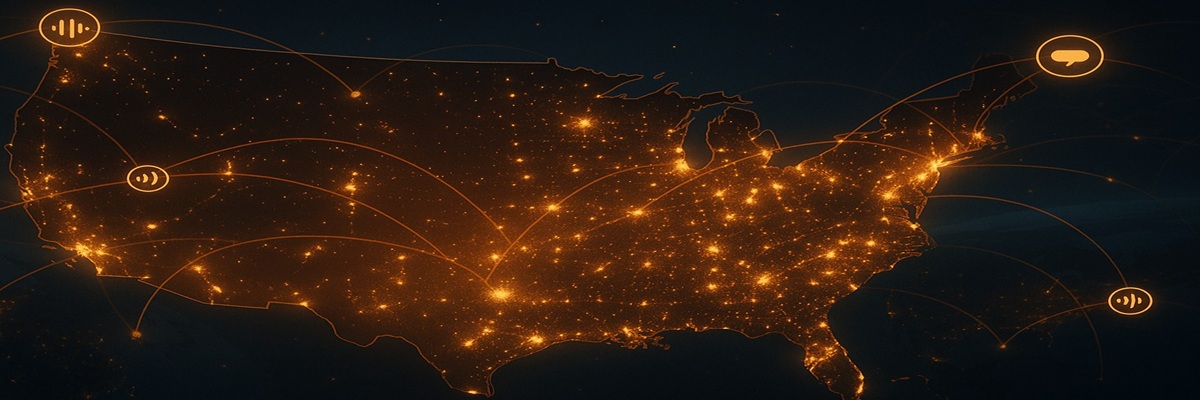
The voiceover industry is undergoing one of its biggest shifts in decades, with studios and talent rethinking how and where recording happens. What began as a temporary adjustment during the pandemic has now evolved into a long-term transformation, redefining what “professional” means for both performers and production facilities. Across Florida and the wider U.S., studios are finding new ways to remain indispensable as remote recording becomes the norm rather than the exception.
Studios Redefining Their Role in a Hybrid Era
Remote voice recording was once a niche solution, used occasionally by actors who couldn’t travel to major markets. Today, it has become a fundamental part of how work gets done. High-speed internet, accessible recording gear, and flexible production workflows have enabled talent to deliver broadcast-quality audio from home setups. For many, the transition has opened doors to projects that were previously out of reach.
This shift has also leveled the playing field geographically. Voice actors based in Florida can now work on projects that previously might have been centered in major production hubs. It’s no longer just about living near the right studio it’s about having a reliable, acoustically treated space and the technical know-how to deliver professional results consistently.
While remote work has empowered talent, it has also pushed traditional studios to rethink their services. Many facilities are no longer just offering booth time they’re positioning themselves as full-service audio partners. This includes offering remote direction, live patch sessions, audio cleanup, and post-production support that home setups may not be equipped to handle.
Some studios are embracing hybrid models, blending remote sessions with occasional in-person recording for projects that demand higher levels of acoustic control or complex multi-voice work. Others are expanding their service offerings, focusing on providing the kind of reliability and engineering expertise that even experienced voice actors can find challenging to replicate at home.
This adaptation is particularly evident in regions like Florida, where a mix of local commercial work, e-learning, tourism media, and national campaigns converge. Studios are finding new ways to serve both local clients and remote talent, helping bridge the gap between flexibility and professional polish.
Technical Expectations Are Transforming Talent
The growth of remote recording has brought new opportunities for voice actors, but it has also raised the bar. Producers now expect talent to deliver clean, broadcast-quality audio without relying on a studio engineer to fix problems later. This means having a properly treated recording space, reliable equipment, and the ability to troubleshoot common issues quickly.
For many performers, that has meant becoming part-actor, part-audio engineer. Skills that were once considered optional such as managing gain structure, understanding basic signal flow, editing with precision, and controlling noise floors are now part of the daily workflow. Those who can combine strong performance with dependable technical execution are finding themselves in higher demand, particularly for fast-turnaround work.
The expectation for “studio-grade” audio from home has also pushed many to invest more seriously in their recording environments. Portable booths, acoustic treatment, and higher-end microphones are becoming standard features in professional home setups. In many cases, a well-constructed home booth can rival commercial studio quality, provided the talent knows how to use it effectively.
A Blended Model and a Flexible Future
While home studios have become more capable, traditional recording spaces aren’t fading away. Instead, the industry is moving toward a blended model that takes advantage of both approaches. Remote sessions allow for flexibility, lower travel costs, and wider access to talent. In-person studio sessions remain essential for certain types of work such as ensemble performances, projects with complex direction, or recordings where absolute acoustic precision is required.
This hybrid structure has created a more dynamic working environment. A single project might involve talent recording initial takes at home, followed by studio-based pickups or group sessions to finalize delivery. Directors and producers are increasingly comfortable managing sessions remotely, using live connections to monitor performances in real time, while still relying on studio infrastructure when the stakes are highest.
Florida, with its mix of local industries and national connectivity, is well-positioned for this kind of hybrid approach. Studios can serve as hubs for larger productions while supporting a growing network of remote talent. This flexibility not only keeps work flowing smoothly but also broadens the kinds of projects that can be produced from virtually anywhere in the state.
Long-Term Impact on the Voiceover Landscape
The evolution of remote and hybrid recording has fundamentally changed how the voiceover industry operates and the shift shows no sign of slowing down. Studios and talent alike are learning to adapt to an environment where flexibility, technical excellence, and collaboration define success.
For studios, the future lies in expanding their roles. Rather than simply renting space, they are becoming production partners, offering specialized services, technical support, and creative guidance that elevate projects beyond what can be achieved in a home booth alone. Facilities that embrace innovation whether through improved connectivity tools, high-end acoustic spaces, or tailored post-production services are finding new ways to stay indispensable.
For voice actors, the path forward involves both artistic and technical growth. Performers who can deliver compelling reads while maintaining consistently high audio standards have a significant edge in a competitive market. Remote recording has also opened up opportunities for talent who might previously have been limited by geography, allowing skilled professionals across Florida to work with clients nationwide and beyond.
This more decentralized, interconnected landscape is also fostering collaboration between talent and studios in ways that weren’t common a decade ago. Remote patching, live direction, and shared project workflows are creating new networks that bring together local and global players seamlessly.
As technology continues to improve, the line between studio and home recording will blur even further. But rather than replacing one with the other, the industry is moving toward a model where both coexist and support each other. For Florida’s voiceover community, this hybrid future offers more creative freedom, broader opportunities, and a stronger presence on the national stage.