
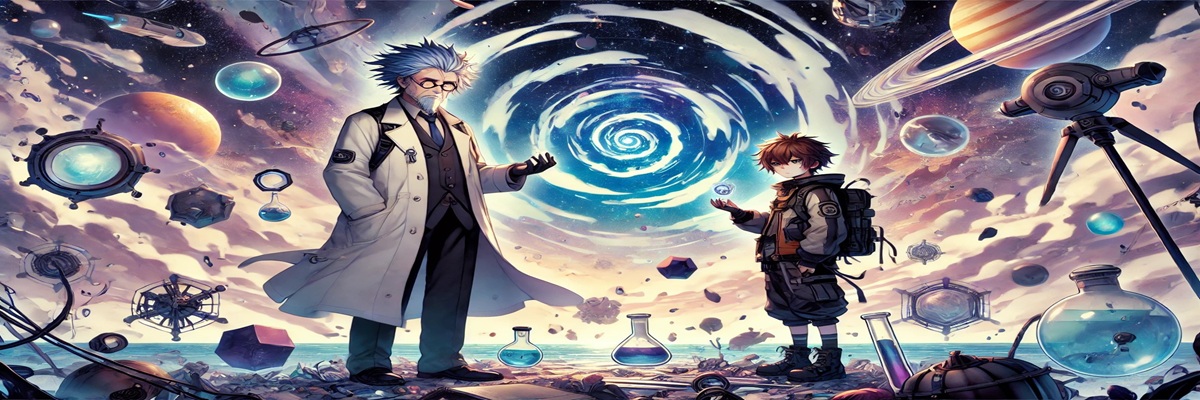
When *Rick and Morty: The Anime* premiered last year, it surprised fans with a completely fresh take on the iconic Adult Swim property. One year later, the series continues to stand apart—not only as a stylistic outlier, but as a bold reinterpretation of what *Rick and Morty* could be when viewed through a different cultural lens.
Directed by Takashi Sano (*Tower of God*), the anime series is not a continuation or spin-off in the traditional sense. Instead, it exists as its own multiversal interpretation of the titular duo—one where familiar personalities and themes are reassembled into wildly different forms. It isn’t just about portal guns and pickle transformations. It’s about loneliness, identity, existential dread, and above all, creative experimentation.
A Complete Stylistic Departure
The first thing viewers noticed is how far the anime strays from the show’s visual roots. Gone is the minimalist line art and rapid-fire editing of the original. In its place are sweeping action sequences, dreamlike set pieces, and slow-burning emotional arcs that unfold more like *Neon Genesis Evangelion* than *Solar Opposites*. The characters still resemble Rick and Morty in broad strokes, but the stories they inhabit are far more abstract and self-reflective.
Sano previously directed several Rick and Morty anime shorts for Adult Swim, and that experimental flavor is fully realized in this standalone series. Each episode is rich with layered symbolism and cultural references unique to Japanese storytelling traditions. From time-looped morality plays to meditative battles with interdimensional samurai, the anime goes where the original never dared to venture.
New Voices, New Vibes
Perhaps the most surprising shift was the absence of the original voice actors. Rather than attempt to replicate Justin Roiland’s iconic delivery, the anime cast entirely new voice actors for both the Japanese and English versions. This wasn’t due to controversy or scheduling—it was an intentional creative decision to signal that this version of *Rick and Morty* is something entirely different.
The Japanese cast, including Yohei Tadano as Rick and Keisuke Chiba as Morty, deliver performances that are more emotionally restrained and less manic. Meanwhile, the English dub also opted for new talent, distancing itself from the cadence and tone of the original series. The result is a show that feels quieter, more thoughtful, and often more unsettling.
Embracing the Multiverse in Spirit, Not Structure
While the original *Rick and Morty* often leaned on sci-fi satire, multiversal escapades, and nihilistic humor, *Rick and Morty: The Anime* uses the multiverse as a metaphorical tool rather than a literal one. Each episode feels like a standalone short film, untethered from canonical structure and free to explore unique visual and thematic tones. One episode might resemble a fever dream drenched in melancholy, while another might echo the aesthetics of a dystopian space opera.
This non-linear approach gives the anime room to breathe, allowing it to explore themes like grief, familial guilt, and even the nature of existence. The anime doesn’t hold the viewer’s hand—it invites them to experience moments, moods, and ideas rather than plot twists and punchlines. While the core dynamics of Rick’s cynicism and Morty’s naivety remain intact, the emotional stakes are much more internalized. These are not characters simply running from consequences—they’re often trapped in them.
A Cult Following Emerges
Initially met with curiosity and skepticism, *Rick and Morty: The Anime* has found its niche among anime fans and followers of the original series who are open to deviation. Its critical reception praised the willingness to push artistic boundaries and explore unexpected emotional depth. Some longtime *Rick and Morty* fans, accustomed to the original’s pacing and absurdity, found the slower, more atmospheric direction to be disorienting. But others celebrated it as a refreshing and overdue evolution.
Interestingly, the anime has also become a bridge between communities—bringing anime fans unfamiliar with *Rick and Morty* into the fold, and encouraging Western animation fans to explore more stylized and symbolic Japanese media. For both camps, the series offers something rare: a familiar concept reimagined without compromise.
Why the Original Voice Cast Didn’t Return
One of the biggest questions when the anime was announced was why Adult Swim chose not to use the original English voice cast. At the time, Justin Roiland had already stepped away from the main series, and new voice actors were stepping into his roles. But this decision for the anime preceded any controversy—it was a creative call made from the beginning.
In fact, Adult Swim and the anime’s producers opted to let the anime be its own experience, rather than shoehorning in continuity or mimicking the original’s cadence. Allowing new actors to embody Rick and Morty in a different tonal framework underscored the entire project’s message: this is not *Rick and Morty* as you know them.
A New Kind of Legacy
Even though *Rick and Morty: The Anime* launched with relatively little mainstream fanfare compared to the flagship series, its long-term impact might be more significant than expected. It represents a growing trend in adult animation—where franchises are no longer bound by stylistic continuity, and creators are encouraged to reinterpret popular properties through fresh cultural lenses.
The anime’s success is not simply about expanding the *Rick and Morty* universe. It’s about affirming that animation—whether Western or Eastern—can carry complex ideas, redefine tone, and shift genre expectations. By blending philosophical quietude with bursts of visual chaos, the anime has carved a space for itself that stands alongside, rather than behind, the main show.
For fans, it’s an invitation to see beloved characters through a different emotional filter. For creators, it’s proof that the multiverse isn’t just a plot device—it’s a creative permission slip. As streaming platforms and studios continue to collaborate globally, the success of projects like *Rick and Morty: The Anime* could pave the way for more hybrid reimaginings in the future.
Where Does It Go From Here?
There’s no official word yet on whether *Rick and Morty: The Anime* will continue with a second season, but interest in the format hasn’t faded. With the rise of anthology-style storytelling and an appetite for unconventional takes on familiar franchises, it wouldn’t be surprising if Adult Swim or other networks revisit the idea.
Whether or not we see more episodes, the anime’s existence is already a milestone. It challenged the expectation that spin-offs must mimic their predecessors and offered a template for what bold, culturally fluid animation can look like. Instead of asking, “How can we keep this character the same?” it asked, “What can this character become?”
For now, *Rick and Morty: The Anime* stands as a quiet triumph—a reimagining that dared to speak a different language, both literally and artistically.