
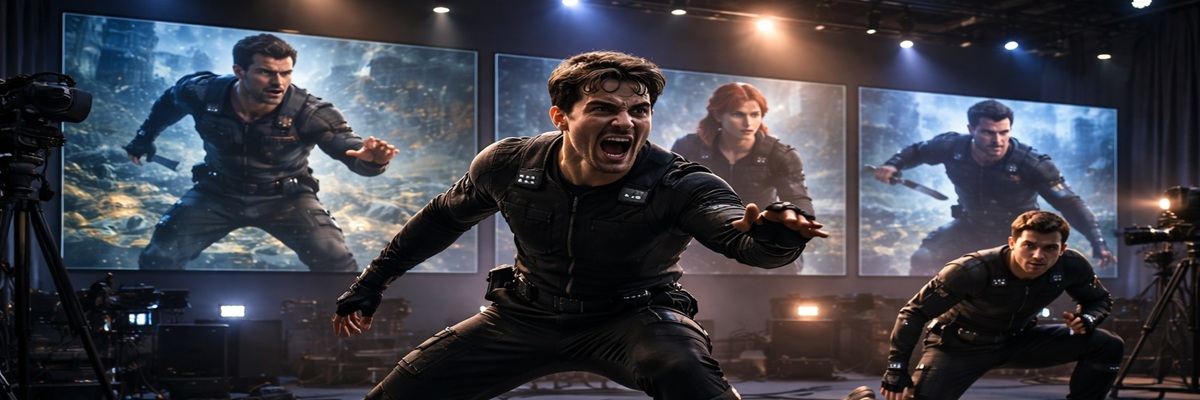
The Game Developers Conference has long been the industry’s most important gathering for professionals working in interactive entertainment. Each year the event brings together programmers, designers, writers, audio engineers, and performers who help shape the future of video games. Among the many specialized tracks at the conference, one area that continues to grow in prominence is the Narrative and Performance category, which focuses on storytelling, character development, and the craft of voice acting in games.
As modern games have become more cinematic, the role of voice actors has expanded significantly. Characters in major titles now rely on nuanced performances, motion capture, and carefully directed dialogue sessions to create believable emotional experiences for players. The Narrative and Performance track at GDC 2026 reflects that evolution, featuring a number of voice actors and performance directors who are sharing their expertise with developers and fellow performers.
Voice Actors and Performance Specialists Featured in the Narrative and Performance Track
The Narrative and Performance sessions include a diverse group of speakers representing different aspects of game storytelling and voice production. Some are well known voice actors who have brought iconic characters to life, while others work as performance directors or narrative designers who collaborate closely with actors during development.
Speakers appearing within the track include:
- Debra Wilson
- Jane Perry
- Tom Keegan
- Damien Goodwin
- Jennifer Hale
- Sam Richardson
- Whitney Beltrán
- Evan Narcisse
Together, these speakers represent a wide range of expertise in game performance, from acting and performance capture to directing voice sessions and designing interactive narratives. Their sessions provide developers with insights into how characters are built through collaboration between writers, actors, and production teams.
Jennifer Hale on the Craft of Voice Acting
Few names in the voice acting industry carry the same recognition as Jennifer Hale. Over the course of her career she has voiced hundreds of characters across games, animation, and television, becoming one of the most influential performers in the field. Many players recognize her as Commander Shepard in the Mass Effect series, while others know her from roles in franchises such as Overwatch, Metal Gear Solid, and numerous animated productions.
Hale has often spoken about the discipline required to deliver strong performances in games. Voice acting, she explains, is far more than simply reading lines into a microphone. Actors must understand the emotional state of a character, the context of each scene, and the relationships between characters within the story.
Game productions can require actors to record an enormous amount of dialogue. In large titles, performers may record hundreds or even thousands of individual lines, often delivered out of sequence as scripts evolve throughout development. Because of this, actors must rely heavily on their understanding of the character in order to maintain consistency across long recording sessions.
Hale also emphasizes that voice acting in games is highly collaborative. Directors, writers, and actors work together to shape how a character ultimately sounds and feels. That collaboration is particularly important in interactive storytelling, where dialogue may branch depending on player choices.
Sessions featuring experienced performers such as Hale offer valuable insight for developers who want to understand how actors approach their craft and how recording sessions can be structured to support strong performances.
Performance and Direction in Modern Game Development
Voice actors rarely work in isolation during game production. Their performances are guided by directors who help ensure that dialogue fits the tone of the story and aligns with the overall vision of the project. Several speakers in the Narrative and Performance track bring experience from the directing side of the process.
Debra Wilson, one of the most prolific voice performers in the industry, has appeared in a wide range of major games. Her performances can be heard in titles such as Star Wars Jedi: Survivor, God of War Ragnarök, and numerous other high profile productions. Wilson’s career demonstrates how voice actors today often move fluidly between voice recording and full performance capture work, combining physical acting with vocal performance.
Tom Keegan represents another crucial role in the process: the voice director. Keegan has directed performances for large projects including The Elder Scrolls Online, guiding actors through complex scripts and helping maintain consistency across large casts. Voice directors often serve as the bridge between the creative team and the actors, translating narrative goals into performance guidance during recording sessions.
Damien Goodwin also contributes to discussions surrounding performance capture and acting for games. As technology continues to advance, actors increasingly perform with motion capture equipment while delivering their lines, allowing animators to capture body language and facial expressions alongside vocal performances.
Together, these speakers provide insight into how performances are developed from both sides of the recording booth.
Why Voice Actors Are Becoming Key Voices at GDC
The growing presence of voice actors within the conference program reflects broader changes within the industry. Video games now rely heavily on narrative and character driven storytelling. Players expect characters to feel authentic, and strong voice performances play a central role in achieving that goal.
Because of this shift, developers are increasingly interested in learning how to work effectively with actors. Sessions in the Narrative and Performance track often explore topics such as directing actors during recording sessions, writing dialogue that supports performance, and integrating voice acting into motion capture pipelines.
Writers and narrative designers also attend these sessions to better understand how dialogue functions in performance. A line that reads well on the page may require adjustments when spoken aloud, particularly when actors bring their own interpretation to a character.
The presence of well known performers and directors at GDC demonstrates that voice acting is no longer viewed as a separate step at the end of production. Instead, performance is becoming a core element of how games are designed and developed.
As storytelling continues to expand within the medium, the role of voice actors will likely remain central to the creation of memorable characters. Conferences like GDC provide a valuable space for actors, developers, and narrative designers to share knowledge and refine the craft that brings interactive stories to life.