
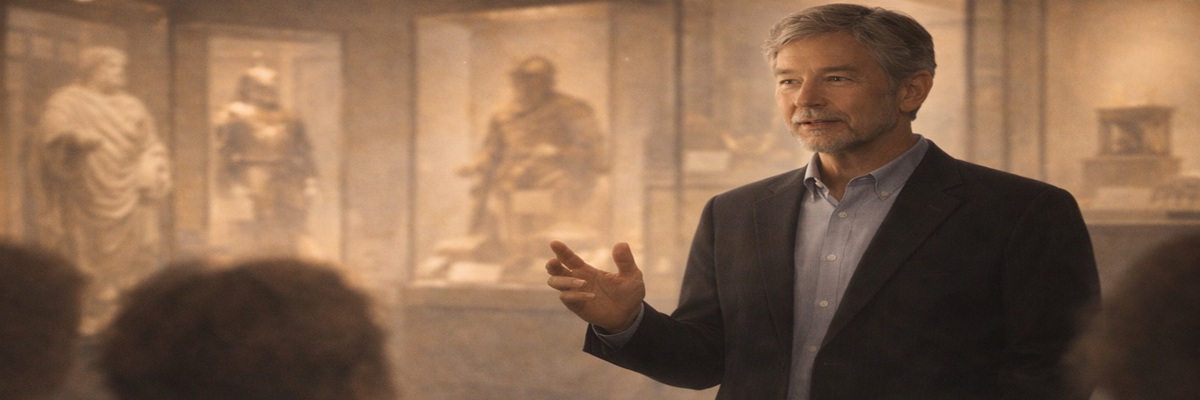
For many museum visitors, audio description operates quietly in the background. For blind and low-vision visitors, it is the experience. In galleries, memorial halls, and cultural institutions, the voice does not supplement what is seen. It replaces it. That responsibility places museum audio description among the most exacting forms of voiceover work, requiring a level of discipline, precision, and restraint that differs sharply from entertainment-based performance.
As this field gains formal recognition through awards categories such as Outstanding Audio Description – Museums & Cultural Sites, the craft itself deserves closer attention. It sits at the intersection of performance, accessibility, history, and public trust.
What Museum Audio Description Actually Is
Museum audio description is a form of accessibility-focused voice work designed to convey visual information to visitors who cannot see exhibits clearly or at all. Unlike standard audio guides, which often add context or commentary, audio description focuses on translating visual reality into clear, structured language.
This includes describing physical layouts, distances between objects, textures, colors, shapes, and spatial relationships. The voice must help listeners orient themselves in a room, understand where an artifact sits in relation to their body, and build a mental image that aligns with the physical space.
The work is not interpretive. The goal is accuracy, not opinion. Every word choice matters because it shapes how the listener understands both the object and the space around it.
Why This Voiceover Work Is Exceptionally Demanding
Museum audio description places constraints on performance that many other voiceover disciplines do not. Emotional range must be tightly controlled. Language must remain neutral. Pacing must allow listeners time to process complex information without losing their place in the environment.
Unlike narration for film or television, the voice actor cannot rely on music, editing, or visuals to support meaning. The voice carries the full burden of clarity. A pause that feels natural in a documentary can disorient a listener in a gallery. An adjective that seems harmless can unintentionally introduce bias.
There is also a cognitive challenge. The performer must describe visual detail while maintaining spatial awareness, often following a script built around physical movement. The voice becomes a guide through real space, not a story told from a distance.
Real-World Examples From Major Museums and Cultural Sites
Many of the world’s most visited museums rely on professional audio description to ensure accessibility.
The Smithsonian Institution offers structured audio-described tours across multiple museums, including exhibits that range from natural history to American culture. These programs depend on voices that remain consistent across long sessions while conveying dense visual information with care.
The Metropolitan Museum of Art provides audio description for selected galleries and artworks, requiring voices that can describe complex compositions without interpreting artistic intent. The emphasis remains on form, placement, and visual structure.
The British Museum integrates audio description into its permanent collections, where the challenge lies in presenting artifacts from vastly different cultures and eras without imposing tone or judgment.
At sites such as the National 9/11 Memorial & Museum, the demands increase further. Here, the voice must navigate emotionally charged material with restraint. The delivery must respect the gravity of the space while remaining focused on description rather than sentiment.
Describing History Without Editorializing
Historical museums and memorials pose unique challenges for audio description. War museums, civil rights exhibits, and national memorials require language that informs without guiding emotional response.
A slight shift in inflection can alter meaning. A descriptive phrase can unintentionally frame an event rather than present it. Voice actors in these spaces must suppress personal interpretation entirely. Their role is to present facts, visuals, and spatial context so that listeners can draw their own conclusions.
This level of control demands discipline that goes beyond technical skill. It requires an understanding of how voice shapes perception, even when emotion is deliberately minimized.
Where the SOVAS Nominations Fit Into This Discipline
The SOVAS category Outstanding Audio Description – Museums & Cultural Sites reflects a growing acknowledgment of this specialized work. The nominated projects, including the Civil War Museum Audio Description and the Flight 93 Memorial, represent environments where accuracy and restraint are essential.
These projects are not notable because they compete with one another, but because they exemplify what the discipline requires. They involve historically sensitive material, physical navigation, and audiences who depend entirely on the voice for access.
SOVAS recognition places formal value on a field that has operated quietly for years, often without public awareness of the performance demands involved.
Museum Audio Description Differs From Other Voiceover Categories
While museum audio description shares traits with narration and educational voiceover, the differences are significant.
Documentary narration often allows for tone, pacing shifts, and storytelling emphasis. Educational voiceover may include explanation and synthesis. Audiobooks permit expressive range and character perspective.
Museum audio description allows none of these freedoms. It is closer to spatial interpretation than storytelling. The voice must remain present yet unobtrusive, informative without commentary, steady without becoming mechanical.
The performance succeeds when it disappears into the experience.
Museum Audio Description Deserves Serious Attention
Museum audio description is voiceover work stripped to its essentials. There is no room for flourish, personality, or excess. What remains is clarity, accuracy, and trust.
In these settings, the voice enables access to culture, history, and shared public spaces. It allows visitors to move independently through environments that might otherwise remain inaccessible. That responsibility places this discipline among the most demanding forms of voice performance.
Recognition through awards brings visibility, but the true measure of this work lies in its impact. When done well, the voice is not noticed as a performance. It is accepted as a reliable guide through spaces where seeing is not required to understand.