
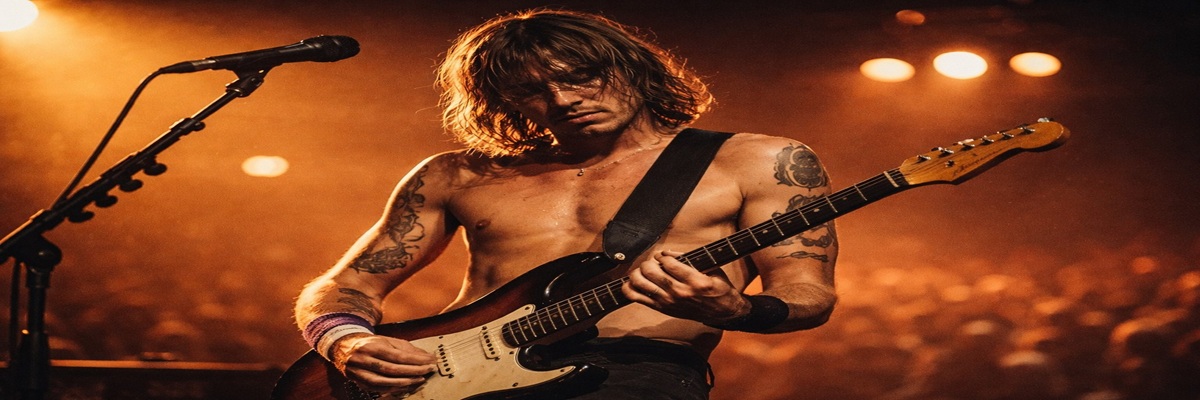
A new Red Hot Chili Peppers documentary is already drawing attention, not just for revisiting the band’s early years, but for a creative decision that is sparking conversation across music and media. The film reportedly features an AI-generated voice recreating the late guitarist Hillel Slovak, offering a version of his perspective decades after his passing.
It is a choice that sits at the intersection of tribute and technology. For some, it presents a way to reconnect with a foundational member of the band. For others, it raises questions about how far modern tools should go when dealing with artists who are no longer here. Either way, it places voiceover work at the center of the discussion in a way that feels especially relevant today.
Hillel Slovak’s Role in the Band’s Early Years
Hillel Slovak was not just an early member of the Red Hot Chili Peppers, he was central to shaping their identity. As the band’s original guitarist, his playing helped define their signature mix of funk, punk, and rock. His style brought a raw, energetic sound that set the foundation for everything that followed.
The Red Hot Chili Peppers formed in Los Angeles in the early 1980s, quickly gaining attention for their unconventional blend of genres and high-energy performances. Slovak’s chemistry with bassist Flea was particularly important, creating a musical dynamic that became a core part of the band’s sound.
His death in 1988, at just 26 years old, marked a turning point. It was a loss that deeply affected the band and influenced their direction moving forward. While the group went on to achieve global success with later albums, Slovak’s contributions remain a significant part of their history.
Even decades later, his influence is still recognized by fans and musicians alike. That lasting impact is part of why his presence in the documentary carries so much weight.
How the Documentary Uses an AI-Generated Voice
The documentary takes an unusual approach by incorporating an AI-generated version of Slovak’s voice. Rather than relying solely on archival footage or traditional narration, the film uses technology to recreate how he might sound telling parts of the story.
This voiceover is designed to provide a perspective that would otherwise be missing. It allows the documentary to present moments from the band’s early years through a reconstructed version of Slovak’s voice, adding a layer that blends history with modern production techniques. The technique also reflects how modern productions are increasingly blending traditional narration styles with formats commonly associated with female promo voice over and contemporary branded storytelling.
The process is understood to draw from existing recordings, interviews, and available material to build a voice model that reflects his tone and delivery. From there, new narration is generated to fit the documentary’s structure.
This approach is not common, and that is part of what makes it stand out. It moves beyond restoring old audio and into creating something new, which changes how audiences experience the story. Instead of hearing only from surviving members or outside narrators, viewers are presented with a version of Slovak that feels active within the film.
Why the Decision Is Raising Questions
The use of an AI-generated voice in this context has naturally led to mixed reactions. On one hand, it can be seen as a creative way to honor Slovak’s role in the band. It gives him a presence in a story where he would otherwise be represented only through past recordings and memories.
On the other hand, it raises concerns about authenticity and consent. Recreating the voice of someone who is no longer alive introduces questions about how their likeness is being used and who has the authority to make those decisions. These concerns are not limited to this project alone, but reflect a broader conversation happening across film, television, and music.
The timing of the documentary adds another layer to the discussion. With AI tools becoming more accessible and widely used, projects like this are likely to become more common. That makes each new example an important part of shaping how audiences and creators respond to the technology.
As for release details, the documentary has been reported as an upcoming Netflix project, though a specific release date has not been firmly confirmed at the time of writing. Its arrival is expected to draw attention not only from longtime fans of the band, but also from those interested in how storytelling is evolving.
The Red Hot Chili Peppers themselves remain one of the most recognizable rock bands in the world, with a catalog that spans decades and continues to attract new listeners. That enduring popularity ensures that any project connected to their history will carry significant interest. Adding a technological element like this only increases that attention, placing the documentary at the center of a conversation that extends far beyond music.