
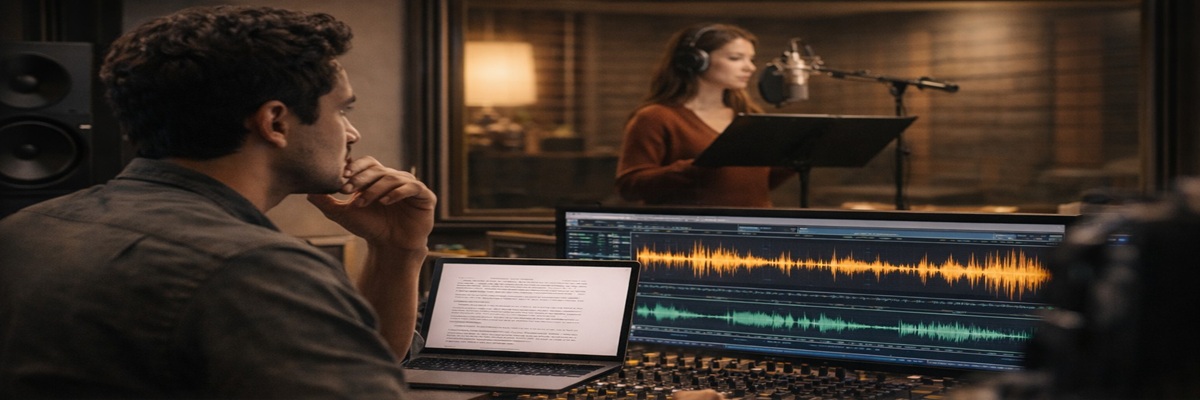
Audiobook narration is often judged by the finished product. Listeners focus on performance, character delivery, and overall storytelling. Long before any of that reaches an audience, casting decisions shape how a book will sound.
Behind every audiobook release is a selection process driven by producers, casting teams, and publishers. These decisions are not based on voice alone. They are built around fit, consistency, and the ability to carry a story across hours of narration.
Understanding how that process works offers a clearer picture of what separates a strong narrator from one who consistently gets booked.
How Casting Decisions Are Made in Audiobook Production
Audiobook casting is structured but not always visible to those outside the industry. Producers are responsible for finding a voice that aligns with the material, the audience, and the overall tone of the book.
Large publishers, including Penguin Random House, manage high volumes of audiobook production each year. This scale requires efficient casting systems that can identify suitable narrators quickly while maintaining quality across projects.
Casting often begins with a shortlist of voices rather than an open search. Producers may draw from established narrators, trusted collaborators, or curated platforms designed specifically for audiobook work. While open marketplaces exist, many professional-level projects rely on networks and prior relationships.
The decision itself is rarely about finding the “best” voice in isolation. It is about selecting the voice that fits the text. A narrator suited for nonfiction may not be the right choice for character-driven fiction. Tone, pacing, and delivery style all influence how well a voice aligns with the material.
This fit-based approach is central to audiobook casting. It shifts the focus away from general vocal appeal and toward suitability for a specific project.
The Role of Samples in Modern Audiobook Casting
One of the most important shifts in audiobook casting is the emphasis on samples rather than traditional demos.
Producers are less interested in hearing a broad range of styles in a single reel. Instead, they want to hear how a narrator handles real text. Samples provide a more accurate representation of performance, showing how a voice interacts with pacing, dialogue, and narrative flow.
A strong sample typically focuses on a single piece of material. It includes both narration and light character work, giving producers a sense of how the narrator manages transitions within a scene. This approach reflects the actual demands of audiobook performance, where consistency matters more than variety.
The use of samples also allows producers to evaluate how well a narrator understands the material. It is not just about delivery, but interpretation. The way a narrator approaches a passage can reveal whether they are aligned with the tone of the book.
This shift has changed how narrators present themselves. Instead of relying on polished demo reels, they build targeted samples that reflect the type of work they want to book.
Performance Traits That Stand Out to Producers
Casting decisions are shaped by a set of performance traits that go beyond vocal quality.
Clarity is one of the most important factors. Audiobooks are long-form content, and listeners need to follow the narration over extended periods. Clear articulation and controlled delivery help maintain that connection. Those same fundamentals extend into other forms of long-form and information-heavy voice work, including medical narration, where complex material needs to remain clear and accessible to the intended audience.
Pacing plays an equally important role. Producers listen for a rhythm that supports the text without rushing or dragging. The narrator must give the listener enough time to absorb information while keeping the story moving.
Consistency is another key element. Audiobooks are often recorded over multiple sessions, and the final product must feel seamless. A narrator who can maintain tone, energy, and character across long recordings is more valuable than one who delivers a strong but inconsistent performance.
Character control is also considered, particularly in fiction. Producers look for subtle differentiation rather than exaggerated voices. The goal is to support the story without distracting from it.
These traits reflect the demands of long-form narration. Audiobook performance is less about variation and more about sustaining a controlled, reliable delivery.
Common Mistakes That Weaken Audiobook Auditions
Many narrators approach audiobook auditions with habits carried over from other areas of voice acting. These habits can work against them in this context.
Overperformance is one of the most common issues. Bringing too much energy or dramatization into a read can make it feel disconnected from the tone of the book. Audiobook narration requires restraint, allowing the text to lead.
Another frequent mistake is treating audiobook auditions like commercial reads. Commercial work often emphasizes impact and persuasion, while audiobooks rely on steady storytelling. The difference in approach is noticeable to casting teams.
Pacing problems also affect how a sample is received. Rushing through material reduces clarity, while overly slow delivery can lose momentum. Finding the right balance is essential.
Some narrators also rely on generic demos instead of submitting targeted samples. This makes it harder for producers to assess how they would perform within the context of a specific project.
Understanding these pitfalls can significantly improve how a narrator is perceived during casting.
Where Audiobook Opportunities Actually Come From
Audiobook work exists across a range of platforms and production models.
Entry-level opportunities are often found on open marketplaces such as ACX, where narrators can audition for a wide variety of projects. These platforms provide access but also come with mixed quality and varying levels of competition.
At a higher level, casting tends to move toward curated systems and direct relationships. Platforms like Ahab Talent connect narrators with authors and publishers, while established production pipelines rely on known voices and trusted collaborators.
As narrators gain experience, their work often shifts from open auditions to repeat clients. Producers who find a voice that fits their projects are likely to return to that narrator for future work. This creates a more stable flow of opportunities over time.
The progression reflects how the industry operates. While entry points are accessible, long-term success is built through consistency and reliability rather than constant auditioning.
Audiobook casting is shaped by decisions that prioritize fit, clarity, and long-form performance. Producers are not simply looking for strong voices. They are looking for narrators who can carry a story from beginning to end without losing connection with the listener.
For those entering the space, understanding this process changes how auditions are approached. It shifts the focus from standing out to aligning with the material.
In audiobook narration, being the right voice matters more than being the most noticeable one.