
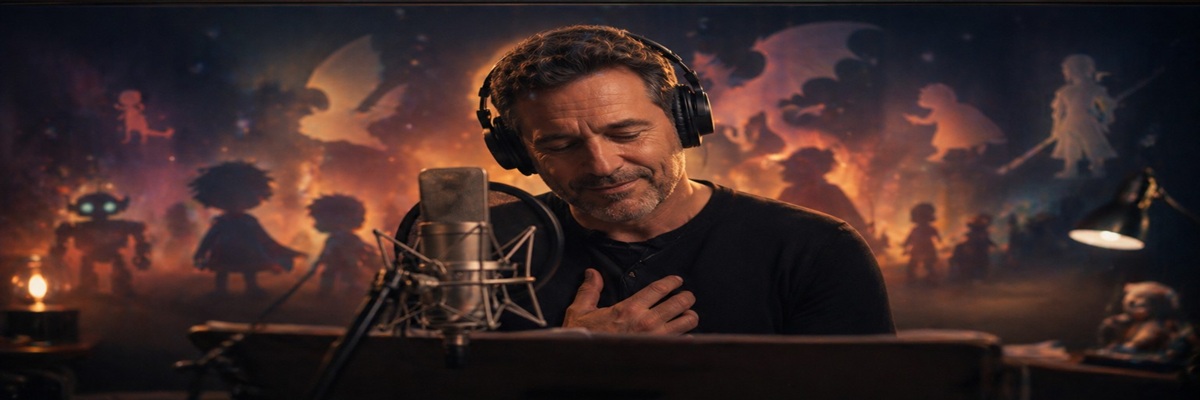
News of Benoît Rousseau’s passing has drawn attention to a career that many audiences may not immediately recognize by name, but have likely experienced through some of the most widely known entertainment properties. His work connected to titles like The Simpsons and Austin Powers placed him within globally recognized franchises, even as much of his contribution remained behind the scenes.
His career reflects a part of the voice acting world that rarely receives the same visibility as on-screen performances, yet plays a critical role in how content reaches audiences across different regions.
A Voice Across Popular Franchises
Benoît Rousseau’s work was tied to major productions that have defined modern pop culture. His involvement with The Simpsons, one of the longest-running animated series, connected him to a show that has shaped television comedy for decades. His association with Austin Powers placed him within a film series known for its distinct tone and global appeal.
These connections highlight the reach of his work. Even when voice actors are not front-facing figures, their contributions become part of the viewing experience for millions of people. In Rousseau’s case, his work extended into projects that continue to circulate widely through television, streaming platforms, and international broadcasts.
This kind of presence is common in voice acting, where performers contribute to well-known titles without always being directly visible to audiences. It underscores how voice work often operates in parallel with mainstream recognition rather than within it.
Career Built in Voice and Localization Work
A significant part of Rousseau’s career was rooted in voice acting and localization, an area that has become increasingly important as entertainment expands globally.
Localization involves adapting content for different languages and cultural contexts, allowing films and television shows to reach audiences beyond their original markets. Voice actors working in this space are responsible for maintaining the tone, timing, and intent of the original performance while delivering it in another language.
This process requires precision and consistency. Dialogue must align with on-screen action, and the performance needs to feel natural within the new language. The goal is not simply translation, but adaptation that preserves the integrity of the original work.
Rousseau’s involvement in this area reflects the broader role of dubbing artists in modern media. Their work allows global franchises to maintain a unified presence across regions, ensuring that audiences can engage with the same stories regardless of language.
Tributes and Industry Response
Following news of his passing, tributes have highlighted both his professional contributions and the respect he earned within the industry. Colleagues and collaborators have acknowledged his work and the role he played in bringing major productions to different audiences.
These responses often focus on the consistency and reliability that define long-term careers in voice acting. Unlike more visible roles, voice work depends heavily on sustained performance across multiple projects and years of production.
The reaction to Rousseau’s passing reflects this kind of career. It points to a body of work built over time, with contributions that may not always be immediately recognized but are widely experienced.
The Role of Dubbing Artists in Global Media
Rousseau’s career also highlights the broader importance of dubbing artists in the entertainment industry.
As streaming platforms continue to expand, content is increasingly distributed across multiple regions at the same time. This has created a growing demand for high-quality localization, including voice acting that can match the tone and pacing of original productions.
Dubbing artists play a central role in this process. They help shape how international audiences experience films and television, often determining whether a performance feels natural or disconnected.
Despite this, dubbing work remains less visible than other areas of voice acting. The performers behind these roles are not always widely recognized, even when their voices are closely associated with major characters or productions.
Rousseau’s work serves as an example of how these contributions operate within the industry. His involvement in widely known titles reflects the reach of dubbing, even when the performers themselves remain outside the spotlight.
Benoît Rousseau’s career represents a part of voice acting that continues to support the global reach of entertainment. His work connected audiences to stories that have traveled across languages and regions, becoming part of how those stories are experienced.
While much of that work takes place outside public recognition, its impact is reflected in the consistency and accessibility of the content itself. His contributions remain part of the productions he helped bring to life, continuing to reach audiences across different platforms and markets.