
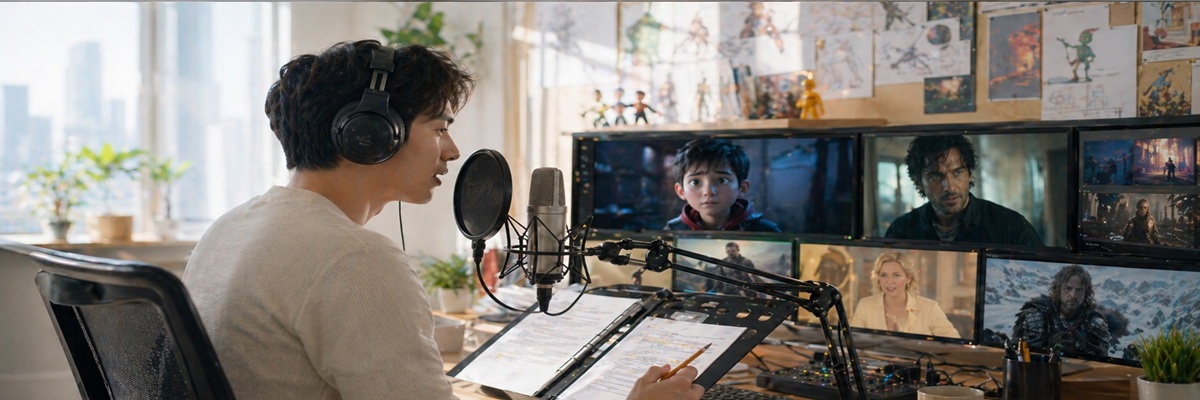
Dubbing is often viewed from the outside as project-based work. A film is released, a series is localized, and the job appears to end there. In reality, many voice actors build careers in dubbing that span decades, working across multiple productions while maintaining a consistent presence in the industry.
This kind of longevity is not driven by visibility. It is built on reliability, repetition, and the ability to sustain performance over long periods of time. For many actors, dubbing becomes a continuous workflow rather than a series of isolated roles.
Consistency as the Foundation of Dubbing Careers
One of the defining traits of dubbing careers is consistency. Actors are often cast repeatedly for the same roles, especially in long-running series or film franchises.
When a character appears across multiple seasons or releases, maintaining the same voice becomes important for continuity. Audiences expect that familiarity, even if they are not consciously aware of it. As a result, casting teams tend to return to the same actors whenever possible.
This creates stability. Instead of constantly auditioning for new roles, dubbing actors often continue working within established projects. Their value comes from being dependable over time, delivering performances that match earlier work without noticeable variation.
Producers and directors rely on this consistency. It reduces uncertainty and helps maintain a unified experience for the audience. Over time, this trust becomes a key factor in sustaining a career.
Working Across Multiple Projects and Studios
Dubbing actors rarely depend on a single production. Most work across a range of projects at the same time, creating a steady flow of work through volume rather than individual roles.
A typical workflow may include a mix of television series, films, and streaming content. These projects often overlap, requiring actors to shift between different roles and styles within the same period.
This multi-project approach helps maintain continuity in employment. When one project slows down or ends, others continue. The overall workload remains stable, even if individual roles change.
Studios also play a role in this structure. Actors may work with multiple studios, each handling different types of content. This expands opportunities while reinforcing the need for adaptability.
The result is a career built on ongoing participation in the industry rather than reliance on a single breakthrough role.
Adapting to Different Genres and Formats
ADR/Dubbing spans a wide range of content, including animated series, live-action films, streaming productions, and international localization work that requires both technical precision and performance consistency. Actors may move between animated series, live-action films, and streaming productions, each requiring a slightly different approach.
Animation often allows for more expressive delivery, while live-action dubbing requires closer alignment with the original actor’s performance. Streaming content adds another layer, with productions varying widely in tone and style.
Actors must adjust their delivery while maintaining control. The ability to shift between genres without losing consistency is an important part of sustaining long-term work.
This adaptability does not rely on dramatic changes in performance. Instead, it involves subtle adjustments that align with the material. Tone, pacing, and intensity may vary, but the overall approach remains grounded in clarity and precision.
Over time, this flexibility allows actors to take on a broader range of projects while maintaining a stable career path.
The Role of Industry Networks and Relationships
Relationships are central to long-term careers in dubbing. Casting decisions are often influenced by familiarity and trust rather than open competition alone.
Directors and producers tend to work with actors they know can deliver consistent results. Once an actor establishes a reputation for reliability, they are more likely to be considered for future projects.
These relationships develop over time through repeated collaboration. Each project reinforces the actor’s position within the network, creating more opportunities without the need for constant outreach.
This dynamic shapes how careers progress. Instead of relying solely on auditions, actors build connections that lead to ongoing work. The industry becomes less about entry points and more about maintaining presence.
Professionalism plays a key role in this process. Meeting deadlines, maintaining quality, and communicating effectively all contribute to long-term relationships with studios and production teams.
Sustaining Performance Over Long Periods
Dubbing requires more than short-term performance. Actors must sustain their work across extended periods, sometimes returning to the same role after significant gaps.
Maintaining vocal consistency is essential. The voice of a character needs to remain stable, even if recordings are separated by months or years. This involves careful attention to tone, pacing, and delivery.
Actors often rely on reference material to match earlier performances. Listening back to previous recordings helps ensure continuity, particularly in long-running series.
There is also a physical aspect to consider. Recording schedules can be demanding, with multiple sessions across different projects. Managing vocal health becomes an important part of maintaining performance over time.
This long-term discipline supports career sustainability. It allows actors to continue working at a consistent level without compromising quality.
Dubbing careers are built on continuity rather than visibility. Actors work across multiple projects, return to familiar roles, and develop relationships that support ongoing opportunities.
The structure of the industry rewards reliability and control. Success is measured over years rather than individual performances, with consistency serving as the foundation for long-term work.
For those within the field, dubbing offers a career path defined by steady involvement rather than public recognition. That stability, built over time, is what allows many actors to sustain their presence in the industry.