
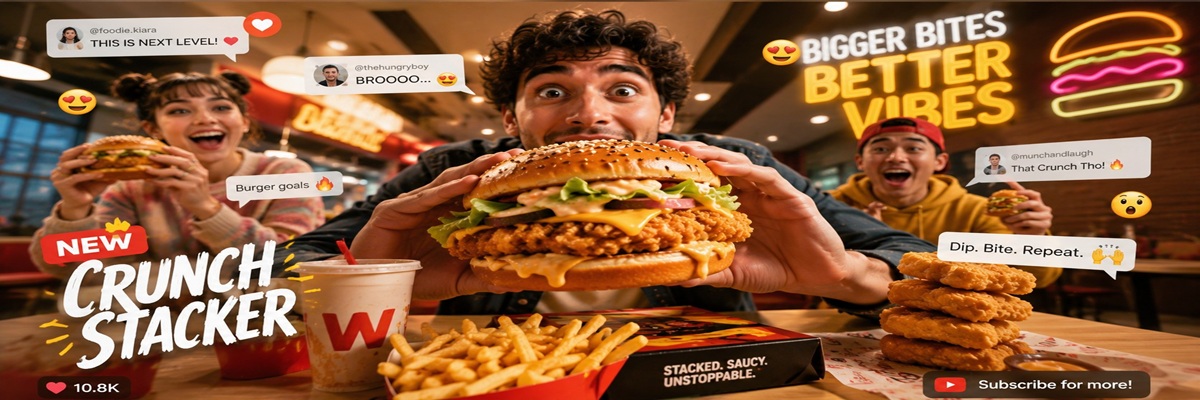
Fast-food advertising once depended almost entirely on energy. Restaurant commercials throughout the 1980s, 1990s, and early 2000s relied heavily on booming announcer narration, oversized enthusiasm, rapid pacing, and relentless promotional urgency designed to dominate television commercial breaks. Every menu item sounded monumental, every limited-time offer felt urgent, and every voice actor was expected to maintain maximum intensity from beginning to end. Commercials were built to overwhelm viewers with excitement quickly enough that the product would remain memorable long after the ad finished airing.
That advertising style made sense within the television environment of the time. Broadcast commercials competed aggressively for attention inside tightly packed ad breaks, and advertisers believed louder, faster narration translated directly into stronger audience recall. Restaurant chains across the industry followed similar structures because viewers expected commercials to sound polished, theatrical, and distinctly different from normal conversation. Fast-food advertising was rarely interested in realism. The primary objective was attention.
Modern restaurant advertising operates under completely different rules.
Many fast-food commercials today intentionally sound casual, sarcastic, self-aware, and conversational in ways that would have felt unusual decades ago. Instead of relying on constant promotional energy, modern campaigns often use deadpan humor, awkward pauses, understated reactions, and personality-driven narration heavily influenced by internet culture and social media communication. The voiceover is no longer simply delivering information about food. It is helping shape an emotional identity for the brand itself.
Few restaurant companies embraced this transition more successfully than Wendy’s. Over the last decade, the company gradually transformed itself into one of the clearest examples of comedy-driven fast-food branding by leaning heavily into sarcasm, socially aware humor, and conversational advertising that felt dramatically different from traditional restaurant commercials. In the process, Wendy’s also demonstrated how commercial voiceover evolved alongside streaming culture, meme humor, and changing audience expectations.
Earlier Restaurant Commercials Focused on Promotional Intensity
Fast-food advertising during the late twentieth century followed a fairly predictable formula across nearly every major restaurant chain. Commercials emphasized value meals, oversized portions, family dining, and promotional pricing while announcers delivered copy rapidly over upbeat music, fast editing, and highly stylized food visuals. Narration rarely slowed down because advertisers believed constant energy prevented audiences from tuning out during commercial breaks.
Wendy’s commercials originally reflected many of those same industry standards. Product descriptions were delivered enthusiastically, promotional offers received repeated emphasis, and narration often sounded carefully projected rather than conversational. Voice actors working in restaurant advertising during this era were typically directed to sound confident, energetic, and polished at all times. Commercial performance itself was considered part of the spectacle.
Much of this style came directly from older broadcast announcer traditions that shaped radio and television advertising for decades. Commercial voice actors frequently borrowed pacing and projection techniques associated with television promo narration, where authority and vocal intensity were viewed as signs of professionalism and persuasion. Even relatively simple menu items were presented with dramatic urgency designed to maximize excitement.
Wendy’s, however, also developed a second advertising identity that subtly distinguished the company from many competitors. Founder Dave Thomas became one of the most recognizable fast-food spokespeople in television history through commercials that relied less on announcer-style performance and more on sincerity. Thomas brought a noticeably calmer and more approachable tone to the company’s advertising at a time when many restaurant commercials prioritized exaggerated enthusiasm above everything else.
His delivery style felt grounded and conversational rather than theatrical. Dave Thomas sounded less like a performer reading ad copy and more like a real person naturally discussing a business he genuinely cared about. Looking back now, his softer approach quietly foreshadowed many of the conversational techniques that would later dominate modern commercial voiceover across the restaurant industry.
As media culture evolved, however, audiences became increasingly resistant to advertising that sounded overly scripted or aggressively promotional. The rise of internet communication accelerated those changes because viewers were now spending enormous amounts of time consuming conversational content online rather than traditional broadcast television. Advertising gradually adapted to match those new communication habits.
Wendy’s Built a Commercial Identity Around Sarcasm and Personality
One of the biggest shifts in modern advertising occurred when brands realized audiences responded more strongly to personality than polish. Wendy’s became particularly effective at understanding this transition because the company embraced humor in ways that felt naturally compatible with social media culture and online communication.
The brand’s online presence became famous for sarcastic replies, playful insults directed at competitors, and self-aware commentary that spread rapidly across platforms like Twitter/X. Instead of maintaining a carefully neutral corporate tone, Wendy’s intentionally cultivated a voice that felt witty, conversational, and culturally online. The company sounded less like a corporation speaking at audiences and more like a personality participating alongside them.
That identity eventually shaped the company’s commercials as well.
Modern Wendy’s campaigns frequently rely on dry humor, deadpan reactions, understated narration, and awkward comedic timing that intentionally avoids traditional announcer energy. The commercials often behave as though they fully understand viewers already recognize how advertising works, which allows the humor to emerge through self-awareness rather than exaggerated performance. Instead of trying to hide the mechanics of advertising, many Wendy’s campaigns subtly acknowledge them and turn that awareness into part of the joke itself.
This represented a major shift in how restaurant commercials approached voiceover. Older fast-food ads generally attempted to persuade audiences through nonstop excitement and aggressive promotional intensity. Wendy’s instead leaned heavily into irony, restraint, and conversational rhythm. The narration frequently sounds casual or intentionally unimpressed, creating a tonal contrast against the exaggerated excitement historically associated with fast-food advertising.
That difference helped the company stand out dramatically in an advertising environment where audiences increasingly ignored traditional commercial techniques. Modern viewers spend much of their time consuming media built around natural conversation through podcasts, livestreams, YouTube creators, TikTok personalities, and meme culture. Highly theatrical announcer reads often feel disconnected from the way people actually communicate online. Wendy’s recognized that audiences frequently trusted humor and personality more than overt salesmanship, particularly younger viewers who had grown up surrounded by internet culture.
The company’s advertising gradually became less focused on aggressively describing products and more focused on creating entertaining moments audiences would remember and share. The narration itself became part of the entertainment rather than simply the mechanism delivering information.
Comedy-Driven Commercial Voiceover Requires Different Performance Skills
Although modern comedy-focused restaurant commercials often sound casual and effortless, the voiceover work behind them is extremely controlled. Comedy-driven narration requires a completely different performance approach than traditional announcer advertising because the humor depends heavily on timing, restraint, pacing, and subtle vocal inflection rather than raw energy.
Older commercial styles prioritized projection, speed, vocal authority, and nonstop enthusiasm. Modern comedic ads often succeed through understatement. A deadpan line reading can fail entirely if the pause before or after the sentence feels even slightly unnatural. Voice actors working in this style frequently rely on awkward silence, conversational reactions, and emotionally restrained delivery instead of exaggerated emphasis.
Wendy’s campaigns regularly use this technique. Narration often feels intentionally relaxed, sarcastic, or mildly detached, creating a comedic contrast against the high-energy performance styles historically associated with restaurant advertising. The commercials understand audiences are already familiar with traditional advertising formulas, so the humor often emerges from subtly acknowledging those formulas rather than pretending they do not exist.
This approach reflects the growing influence of internet humor on mainstream advertising itself. Meme culture frequently relies on awkward pacing, anti-humor, dry reactions, and intentionally underplayed delivery. Restaurant commercials increasingly adopted those same rhythms because younger audiences recognize and respond to them instinctively. Wendy’s became especially effective at translating internet-style comedic timing into mainstream commercial voiceover without making the campaigns feel forced or artificially trendy.
Other restaurant chains eventually moved in similar directions. Burger King experimented with bizarre and intentionally uncomfortable ad pacing, while Taco Bell leaned heavily into youth-oriented surreal humor and culturally online narration styles. Sonic and Jack in the Box increasingly embraced conversational comedy as central branding tools. Wendy’s, however, became one of the clearest examples of how sarcasm and humor could evolve from simple marketing techniques into a recognizable commercial voice identity.
Social Media Changed the Personality of Restaurant Advertising
One major reason comedy became so important in modern commercial voiceover is that social media fundamentally changed how brands communicate with audiences. Traditional advertising once depended heavily on maintaining polished corporate presentation, but internet culture rewarded something entirely different. Brands that sounded overly formal or carefully scripted often struggled online, while companies that embraced humor, sarcasm, and conversational interaction generated far stronger engagement.
Wendy’s became one of the most visible examples of this transformation because the company successfully turned its social media voice into a recognizable entertainment identity. That online personality eventually reshaped the company’s broader advertising strategy, influencing not only how commercials were written but also how they sounded.
Modern restaurant commercials increasingly reflect internet communication styles through casual phrasing, self-aware humor, meme-influenced pacing, and conversational narration that would have seemed unusual in mainstream advertising decades earlier. Commercial voiceover adapted directly to the rhythms audiences encountered daily on social media platforms.
This shift also changed how viewers emotionally process advertising itself. Traditional commercials often attempted to persuade audiences directly through authority and excitement. Comedy-driven advertising frequently persuades more indirectly by lowering audience resistance through entertainment and relatability. Humor makes audiences feel more relaxed and emotionally open, which allows branding to feel less intrusive.
Wendy’s became highly effective at balancing those elements. The company’s commercials still promote products aggressively, but the promotional language is often disguised beneath sarcasm, personality, and conversational familiarity. Audiences may remember the joke, tone, or comedic rhythm before they consciously remember the menu item itself. That subtle shift represents one of the most important changes in modern commercial voiceover.
Fast Food Commercials Now Prioritize Personality Over Volume
Restaurant advertising remains one of the most voiceover-dependent categories in the commercial industry because food branding relies heavily on emotional association. Narration still shapes whether an ad feels comforting, funny, modern, relatable, premium, or culturally relevant. The difference is that modern commercials increasingly create those emotional reactions through personality rather than pure promotional intensity.
Wendy’s evolution demonstrates how dramatically food & beverage voiceover commercials changed over time. Earlier campaigns relied heavily on energetic advertising traditions shared across most fast-food brands, while modern campaigns depend far more on sarcasm, humor, conversational realism, and internet-aware comedic pacing. The company’s advertising transformation mirrored broader changes happening across entertainment, streaming, and online communication itself.
Modern audiences generally respond more positively to voices that sound emotionally believable and culturally familiar rather than aggressively performative. Fast-food commercials still aim to sell products as effectively as older campaigns did, but the methods became significantly more sophisticated. Today, some of the most successful restaurant ads no longer sound like traditional commercials at all. They sound like brands participating naturally in the same conversational humor audiences already encounter throughout the rest of their media experience.