
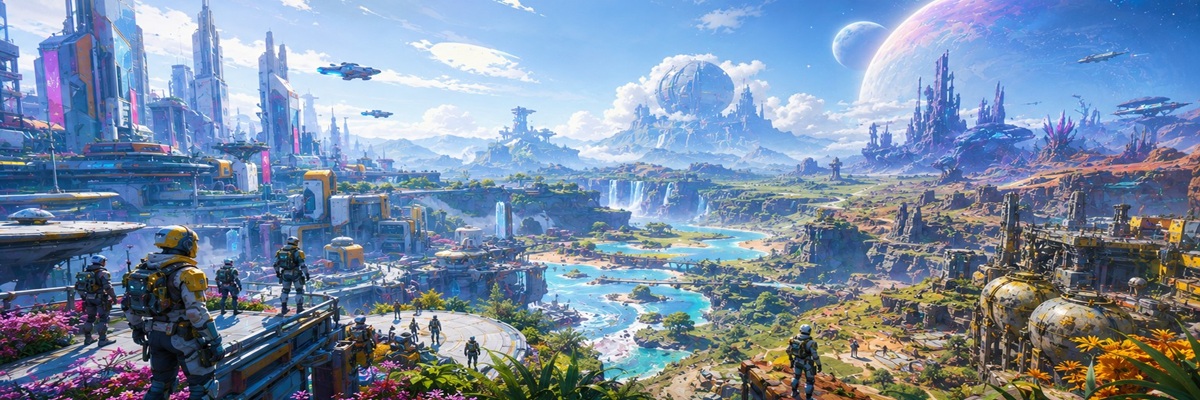
For years, multiplayer shooters were designed around repetition. Players returned for rankings, mechanical mastery, seasonal rewards, and competitive progression while narrative existed mostly in the background. Story campaigns and multiplayer modes often felt completely separate from one another, with voice acting used primarily for mission briefings, combat callouts, or occasional cinematic scenes between matches.
That structure changed dramatically over the last decade.
Modern multiplayer games increasingly operate as evolving narrative ecosystems where characters, lore, seasonal storytelling, and long-term world-building become central parts of player retention. Franchises such as Destiny, Apex Legends, Overwatch, and Valorant demonstrated that audiences now expect recurring characters, emotional continuity, and recognizable performances even inside highly competitive online environments.
Bungie’s Marathon became one of the clearest recent examples of this industry transition during 2026.
Throughout the year, Bungie repeatedly emphasized that Marathon was being designed not simply as a multiplayer extraction shooter, but as a long-term narrative universe intended to evolve over multiple years. Interviews published by GamesRadar and Video Games Chronicle in mid-2026 confirmed the studio already had multi-year story plans mapped out for the project, while later reveals involving PvE content and survival-horror atmosphere further reinforced Bungie’s broader ambitions for the game.
The messaging suggested Bungie understood something increasingly important about modern multiplayer development: gameplay systems alone are no longer enough to sustain long-term audience investment.
Multiplayer Games No Longer Treat Story as Background Material
Earlier online shooters rarely depended heavily on narrative continuity because the primary focus remained mechanical gameplay. Competitive matches reset constantly, character identity mattered less than player skill, and lore often existed mainly through manuals, loading screens, or optional background materials. Voice acting supported the action but rarely carried major emotional weight inside the overall player experience.
That philosophy gradually changed as live-service games evolved.
Studios began realizing players formed strong emotional attachments to recurring characters, particularly when those characters remained active across years of seasonal storytelling. Destiny became one of the strongest examples of this evolution because Bungie transformed ongoing narrative progression into a major part of the game’s long-term identity. Characters such as Commander Zavala, Cayde-6, Ikora Rey, and The Drifter became emotionally important to players through years of recurring appearances and evolving storylines.
Voice acting became essential to that transformation.
Performers no longer existed merely to deliver exposition or mission objectives. Their voices became part of the emotional continuity connecting players to the world itself. Lance Reddick’s performance as Zavala demonstrated how strongly audiences could emotionally associate recurring multiplayer characters with the actors portraying them. Following Reddick’s death in 2023, player reactions revealed just how deeply narrative performance had become integrated into the emotional foundation of live-service gaming.
Marathon appears to be following that same philosophy from the beginning.
Bungie’s January 2026 cast reveal included performers already strongly associated with cinematic storytelling and emotionally driven games, including Jennifer English, Ben Starr, Elias Toufexis, Erica Lindbeck, Nika Futterman, David Menkin, and Donnla Hughes. The casting choices suggested Bungie wanted audiences emotionally invested in recurring characters and long-term narrative progression rather than treating the game purely as a mechanical extraction-shooter experience.
That approach reflects a broader shift happening throughout multiplayer gaming itself.
Seasonal Storytelling Changed How Shooters Retain Players
One reason multiplayer storytelling became so important is that live-service games now compete for long-term emotional attention rather than simply launch-week sales. Modern online games are expected to sustain player engagement for years through seasonal updates, evolving lore, narrative events, limited-time modes, cinematics, and ongoing character development.
That structure transformed storytelling into part of the retention strategy itself.
Games such as Apex Legends demonstrated how recurring characters and seasonal narrative reveals could maintain player interest between gameplay updates. Overwatch built enormous fan attachment through cinematic storytelling and voice performance even when major narrative progression inside the game itself remained limited. Riot Games later expanded Valorant’s character-driven approach through animated shorts, environmental lore, and increasingly cinematic presentation.
Bungie helped pioneer many of these systems through Destiny, where long-form narrative development became deeply tied to seasonal player engagement.
The company now appears to be applying similar ideas to Marathon, but with additional emphasis on atmosphere and environmental storytelling. During 2026, Bungie increasingly described Marathon less as a competitive extraction shooter and more as an evolving science-fiction world built around mystery, psychological tension, and long-term narrative immersion.
That tonal shift became especially noticeable after the release of the “Nightfall” trailer in May 2026. Coverage from Kotaku and other gaming outlets highlighted the trailer’s stronger survival-horror atmosphere, environmental dread, and darker emotional tone compared to earlier public expectations surrounding the game.
The reaction demonstrated how strongly atmosphere itself now influences audience perception of multiplayer games.
Players increasingly expect online worlds to feel emotionally immersive rather than mechanically functional. Environmental storytelling, sound design, voice acting, and narrative mystery now shape player attachment almost as strongly as gameplay systems themselves.
Voice Acting Became Central to Multiplayer Immersion
As multiplayer games evolved into long-form entertainment ecosystems, voice acting became far more important to maintaining immersion and emotional continuity. Modern live-service storytelling depends heavily on recognizable performances because players spend years hearing the same characters evolve across updates, expansions, and seasonal events.
That creates a relationship between player and performer very different from traditional multiplayer shooters.
Earlier online games often used generic military dialogue or mechanically focused combat communication with little emotional identity attached. Modern multiplayer titles increasingly rely on distinctive performances that make characters feel emotionally persistent across hundreds of gameplay hours.
Marathon’s cast reflects that changing expectation clearly.
Jennifer English, Ben Starr, and Elias Toufexis are not performers primarily associated with anonymous shooter archetypes. They are actors strongly connected to emotionally layered storytelling and recognizable character identity. Bungie’s decision to center those types of performers suggests the studio wants Marathon’s narrative atmosphere to remain emotionally memorable even within competitive gameplay systems.
That emphasis may become increasingly important as multiplayer games compete not only against other shooters, but against streaming entertainment, social media ecosystems, anime fandoms, RPG storytelling, and constantly evolving online communities.
Modern audiences often expect multiplayer worlds to function more like ongoing fictional universes than isolated competitive products.
Marathon Represents the Industry’s Next Narrative Experiment
The uncertainty surrounding Marathon throughout 2026 partly reflects how ambitious Bungie’s larger goals appear to be. The company is not simply attempting to launch another online shooter. Bungie seems to be trying to build an evolving science-fiction platform capable of supporting multi-year narrative development, recurring character arcs, PvE storytelling, competitive gameplay, survival-horror atmosphere, and live-service progression simultaneously.
That is an extremely difficult balance to maintain.
Many live-service projects struggle because they focus too heavily on mechanical engagement while neglecting emotional investment. Others build fascinating worlds but fail to sustain compelling gameplay over time. Bungie’s challenge with Marathon is attempting to merge both approaches into a single long-term ecosystem.
Whether the project ultimately succeeds remains uncertain, especially given growing player fatigue surrounding live-service models and extraction shooters specifically. Yet the studio’s repeated emphasis on long-term storytelling plans reveals how dramatically multiplayer development priorities changed across the industry itself.
Modern online shooters increasingly depend on emotional continuity, recurring performances, environmental immersion, and evolving narrative identity to maintain player attention over years rather than months.
Marathon may ultimately become one of the clearest examples yet of how multiplayer games are evolving into persistent storytelling platforms where voice acting, atmosphere, and character identity matter just as much as competitive mechanics themselves.