
Restaurant commercials are often remembered for limited-time offers, catchy slogans, or dramatic food photography. Many campaigns rely on humor, celebrity appearances, or fast-paced editing designed to capture attention quickly. Yet some of the most successful restaurant advertising takes a different approach. Instead of focusing on urgency or spectacle, it focuses on memory.
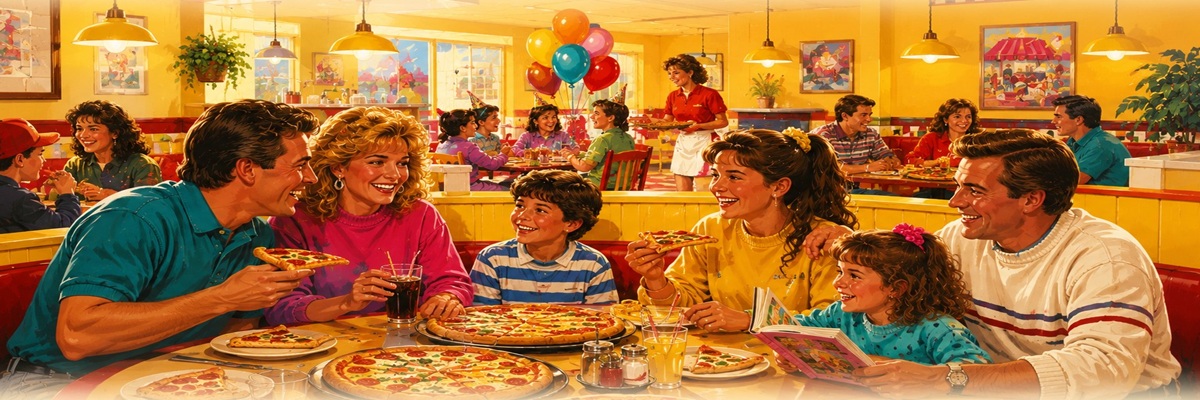
For decades, Pizza Hut built much of its advertising around experiences rather than products. The food remained important, but the commercials frequently emphasized birthday parties, family dinners, school celebrations, sports gatherings, and movie nights. The restaurant became part of larger moments in people’s lives, and voiceover played a crucial role in creating that emotional connection.
Unlike brands that leaned heavily into comedy or promotional intensity, Pizza Hut often embraced warmth, familiarity, and storytelling. Narration was frequently used to reinforce feelings of togetherness and comfort rather than simply encourage an immediate purchase. The result was a style of commercial voiceover that felt less like advertising and more like a shared memory.
This approach helped Pizza Hut occupy a unique place within restaurant advertising. While many competitors focused on what was being served, Pizza Hut often focused on who was sharing the meal and why the moment mattered.
Pizza Hut Became Part of Family Entertainment Culture
During the 1980s and 1990s, Pizza Hut established itself as more than a restaurant. For many families, it became part of a routine connected to celebrations and special occasions. Birthday parties, little league victories, school achievements, and weekend family outings frequently included a visit to Pizza Hut. The company’s red-roof restaurants became familiar landmarks in communities across North America and beyond.
One of the most influential programs associated with the brand was Book It!, launched in 1984. The reading incentive program rewarded children with free pizza for reaching reading goals. Millions of students participated over the years, creating positive associations between Pizza Hut and childhood achievement. For many families, the restaurant became connected not just to food but to memories of accomplishment and shared family experiences.
This positioning naturally influenced the company’s advertising voice. Commercials often focused on groups rather than individuals. Families gathered around tables, children celebrated milestones, and friends shared meals after activities. The narration typically reflected those themes through warm, inviting delivery rather than aggressive sales language.
Voiceover performances in these campaigns frequently emphasized togetherness. Rather than describing ingredients or prices for the majority of the commercial, the narration often helped establish an emotional setting. The food became part of the story rather than the entire story itself.
That distinction mattered. Consumers were not simply being shown a restaurant. They were being shown a place where meaningful moments happened.
Movie Tie-Ins Created Generational Memories
Another major component of Pizza Hut’s advertising success came through its extensive entertainment partnerships. Throughout the late twentieth century and early twenty-first century, the company became closely associated with some of the most recognizable film and television properties of their respective eras.
Promotions connected to Back to the Future, Teenage Mutant Ninja Turtles, Batman, Space Jam, Star Wars, and numerous other franchises helped Pizza Hut become part of family entertainment culture. Children often encountered these campaigns during periods of intense excitement surrounding major movie releases, creating strong emotional associations that lasted long after the promotions ended.
These campaigns required a slightly different voiceover approach than traditional family-oriented advertising. The narration needed to generate excitement while still maintaining the welcoming and accessible tone associated with the brand. Commercials often balanced high-energy promotional messaging with the reassuring warmth that defined much of Pizza Hut’s broader identity.
Unlike some fast-food campaigns that relied heavily on rapid-fire announcer delivery, Pizza Hut frequently allowed its commercials room to breathe. The voiceovers guided viewers through the excitement of an upcoming film or promotion while maintaining a sense of anticipation and shared experience.
This approach proved particularly effective because the promotions themselves often centered around family participation. Collectible items, themed packaging, and special events encouraged parents and children to engage with the promotion together. The narration reinforced those dynamics by emphasizing the experience surrounding the meal rather than treating the food as an isolated product.
Many consumers who grew up during these promotional periods still recall the campaigns decades later. In many cases, they remember the overall feeling of excitement and anticipation before they remember specific menu items being advertised.
That is one of the strongest indicators of successful storytelling-driven voiceover.
Comfort and Nostalgia Became the Brand’s Strongest Advertising Assets
As advertising evolved and media consumption habits changed, Pizza Hut increasingly leaned into nostalgia and emotional storytelling. While promotional campaigns remained important, many of the brand’s most memorable advertisements focused on familiar experiences and personal connections.
This strategy reflected a broader understanding of consumer psychology. Nostalgia often creates powerful emotional responses because it connects people to positive memories from earlier stages of life. Restaurant brands are particularly well positioned to benefit from this effect because food is frequently associated with family traditions, celebrations, and personal milestones.
Pizza Hut possessed a significant advantage in this area. Several generations of consumers already associated the brand with specific moments from childhood and adolescence. Commercials that acknowledged those memories could create an immediate emotional connection without relying on elaborate storytelling.
Voiceover became one of the primary tools for delivering that emotional tone.
Warm narration styles helped create a sense of familiarity and comfort. Performers often adopted conversational pacing designed to feel natural rather than highly produced. Smile-through-the-voice delivery techniques, where warmth is conveyed through subtle vocal choices, became especially effective in this type of advertising environment.
The strongest examples rarely sounded like traditional commercials. Instead, they resembled stories being shared. Narration guided viewers through experiences that felt recognizable, whether it was a family gathering, a celebration after a sports game, or a simple evening spent together at home.
This emotional familiarity became one of Pizza Hut’s most valuable advertising assets because it differentiated the brand from competitors focused primarily on product features or price promotions.
How Restaurant Voiceover Creates Emotional Memory
The effectiveness of Pizza Hut’s advertising highlights an important truth about commercial voiceover. People often remember experiences more clearly than products.
A consumer may forget the details of a specific promotional offer, but they are far more likely to remember how an advertisement made them feel. Voiceover contributes significantly to that emotional memory because the human voice carries emotional information in ways visuals alone cannot achieve.
Warm narration can make a scene feel welcoming. Conversational delivery can create intimacy. Gentle pacing can reinforce comfort and familiarity. These techniques operate subtly, but their impact can be substantial.
Comparing Pizza Hut’s advertising to other major restaurant brands helps illustrate this point. Domino’s frequently emphasizes realism and everyday convenience. Wendy’s often relies on humor and personality. Burger King has experimented with disruption and unconventional messaging. McDonald’s frequently focuses on emotional familiarity and broad cultural recognition.
Pizza Hut occupies a slightly different position. Its strongest advertising often centers on memory itself.
The narration supports that objective by helping audiences reconnect with experiences they may have shared years earlier. A commercial does not need to explicitly reference childhood memories to evoke them. Sometimes a familiar tone of voice, a comfortable pacing style, or a simple family interaction is enough to trigger those associations naturally.
That emotional response creates a lasting impression because it feels personal rather than promotional.
Nostalgia Remains One of Commercial Voiceover’s Most Powerful Tools
Pizza Hut’s advertising history demonstrates that restaurant commercials do not always need to rely on urgency, humor, or dramatic product presentation to remain memorable. By focusing on family experiences, entertainment culture, celebrations, and shared moments, the brand built a distinctive identity rooted in emotional storytelling. Nostalgia-driven advertising also changes what brands need from the performer behind the microphone. Rather than relying on a traditional announcer sound, this type of commercial voice over often calls for warmth, authenticity and conversational delivery that makes the audience feel as though they are remembering an experience rather than being sold a product. The strongest performances leave room for the imagery, music and familiar brand associations to carry part of the emotional message, allowing the voice to reinforce the memory without overwhelming it.
Voiceover played a critical role in supporting that identity. Warm narration, conversational delivery, and comfort-oriented storytelling helped transform ordinary restaurant commercials into experiences that felt familiar and emotionally meaningful. Rather than competing solely on menu items, Pizza Hut frequently competed on memory.
That approach continues to resonate because nostalgia remains one of the most effective emotional tools available to advertisers. People naturally gravitate toward experiences that remind them of positive moments from their lives, and skilled commercial performers can reinforce those feelings through subtle but powerful vocal choices.
The lasting success of Pizza Hut’s advertising suggests that some of the most effective commercial voiceover is not the loudest, funniest, or most dramatic. Often, the most memorable performances are the ones that quietly become part of a cherished memory, helping audiences remember not just what they ate, but who they shared it with and why the moment mattered.