
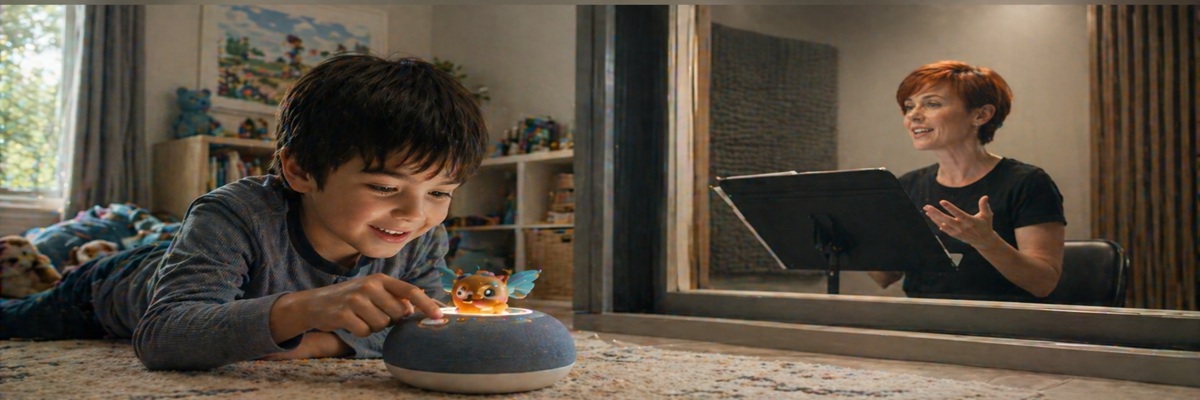
Character voice acting has traditionally been associated with animation, film, and video games. That boundary has expanded. Today, character-driven voice performances are appearing in formats that operate outside of traditional entertainment, including toys, interactive devices, and hybrid storytelling platforms.
This shift reflects how audiences engage with content. Characters are no longer limited to screens. They exist in products, experiences, and environments where voice becomes the primary connection between the user and the character. As a result, the craft of character voice acting is adapting to meet new expectations.
The Rise of Character Voice Acting in Toys and Devices
One of the clearest examples of this expansion is the growth of interactive audio toys. Platforms like Tonies have introduced a format where voice acting carries the entire experience. Without screens or visual storytelling, the voice must create the character, guide the narrative, and maintain engagement.
Amanda Turen’s award-winning performance as Cosmo in Tonies Lalalinos – Bumbaloo Beats reflects this shift. Her work demonstrates how voice acting adapts when the audience is interacting with a device rather than watching a screen. The performance needs to be immediate, clear, and inviting.
In these formats, the voice replaces many of the elements typically handled by visuals. Tone and rhythm become central, helping to establish personality and maintain attention. The delivery must feel consistent, especially in products designed for repeated use.
This environment places different demands on the actor. Instead of supporting a visual narrative, the voice becomes the foundation of the experience.
Performance Challenges in Non-Traditional Formats
Working in non-traditional formats introduces a set of challenges that differ from animation or long-form storytelling. One of the most important factors is repetition. Audio in toys and interactive devices is often replayed multiple times, sometimes in short loops.
This requires careful control over delivery. The performance must remain engaging without becoming overwhelming or repetitive. Small details, such as pacing and emphasis, can affect how the voice is perceived over time.
Another challenge is the length of content. Many of these formats rely on shorter segments rather than extended scenes. The actor needs to establish character identity quickly, often within a few lines, while maintaining consistency across multiple segments.
Audience expectations also shift. In children’s content, clarity and accessibility are essential. The voice must be easy to follow while still carrying enough personality to keep the listener engaged. This balance is different from performances aimed at older audiences, where subtlety may play a larger role.
These constraints shape how character voice acting is delivered. The performance is designed not only for impact, but for durability across repeated interactions.
Blending Entertainment and Interaction
Character voice acting in these formats often serves a dual purpose. It is both entertainment and interaction. The voice does not simply tell a story; it guides the user through an experience.
In interactive products, the voice may respond to actions, provide instructions, or transition between different pieces of content. This adds a functional layer to the performance. The actor must maintain character while also delivering information clearly.
This blending of roles changes how the performance is structured. Lines are often designed to be flexible, allowing them to fit within different user interactions. The tone needs to remain consistent, even as the context shifts.
The result is a form of character voice acting that is less linear. Instead of following a fixed narrative, the performance supports multiple entry points and outcomes. This requires a different level of adaptability, where the actor anticipates how the voice will be used rather than how it will be heard in sequence.
Expanding Opportunities for Voice Actors
As these formats continue to grow, they are creating new opportunities within the voice acting industry. Companies outside of traditional entertainment are now producing character-driven content, bringing voice actors into areas such as consumer products and technology.
This expansion broadens the scope of character voice work. Actors are no longer limited to studios focused on film, television, or games. They are working with brands, developers, and product designers, contributing to experiences that extend beyond conventional storytelling.
The skill set required for these roles reflects this change. Adaptability becomes more important, as actors move between formats that require different approaches. The ability to create a strong character voice remains central, but the application of that skill varies depending on the platform.
These opportunities also highlight how character voice acting is evolving. It is becoming integrated into everyday experiences, reaching audiences in new ways and contexts.
Character voice acting is no longer confined to traditional media. It is expanding into formats where voice defines the entire interaction, from toys and devices to interactive storytelling platforms. Performances like Amanda Turen’s illustrate how the craft adapts to these environments, balancing clarity, consistency, and engagement.
As these formats continue to develop, they are reshaping how characters are created and experienced. The voice is not just supporting the story. In many cases, it is the story, guiding the audience through an experience that exists beyond the screen.