
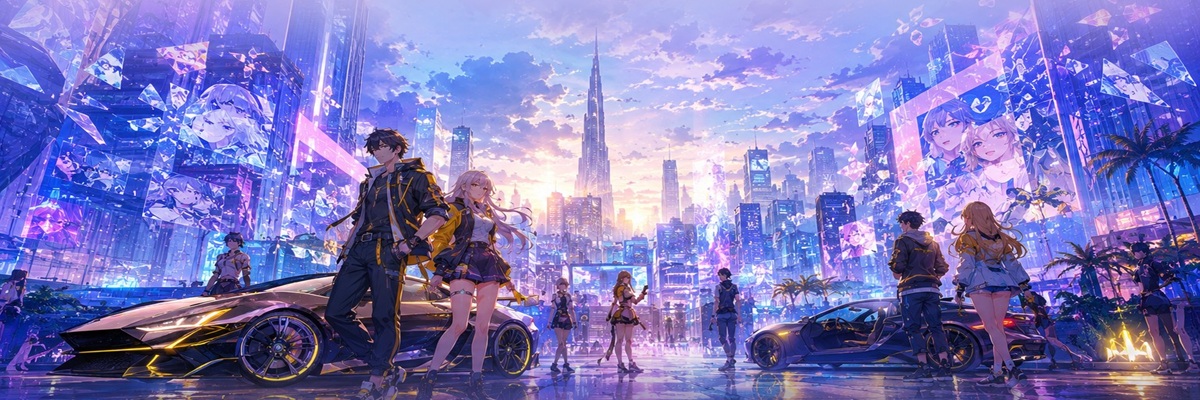
Neverness to Everness entered 2026 as one of the most visually ambitious upcoming gacha games in development. The urban fantasy RPG attracted major attention because of its high-end anime presentation, open-world city design, supernatural themes, driving mechanics, and unusually stylish modern aesthetic that separated it from many other fantasy-focused gacha projects. Throughout early 2026, the game steadily built momentum among players following anime RPGs and live-service character-driven games.
That excitement changed dramatically in late May 2026 after accusations surrounding generative AI usage began circulating online.
The controversy escalated quickly after streamers, artists, and voice actors publicly stated they would no longer work with or promote the game because of concerns involving allegedly AI-generated assets connected to marketing and development materials. Within days, Neverness to Everness, often shortened to NTE, became part of a much larger debate surrounding AI usage in game development, artistic labor, and the growing tension between studios and performers across the entertainment industry.
The backlash became especially significant because the controversy emerged during an otherwise important promotional period for the game. At the same time criticism surrounding AI usage intensified, the developers were also preparing to showcase major new content updates connected to Version 1.1, including new regions, gameplay systems, additional characters, and even a Porsche collaboration event designed to expand the game’s visibility globally.
The situation turned Neverness to Everness into another major example of how quickly AI-related concerns can reshape public conversation around a modern live-service game.
The AI Controversy Escalated Rapidly in May 2026
Public criticism surrounding Neverness to Everness intensified during the final weeks of May 2026 after online users began pointing to suspected AI-generated visual assets associated with the project’s promotional materials. Artists and community members highlighted inconsistencies and image artifacts they believed resembled generative-AI output, which quickly sparked broader conversations across social media regarding transparency and creative labor in game development.
The backlash escalated further after several streamers and voice actors reportedly distanced themselves from the project publicly. According to reports published by GameSpot and other outlets, some performers stated they would refuse collaboration opportunities connected to the game because of concerns surrounding AI-generated artwork and broader ethical issues involving generative tools in entertainment production.
That reaction reflected a growing shift happening throughout gaming and voice acting industries more broadly.
Over the last two years, performers, artists, and unions increasingly raised concerns about AI systems replacing creative labor, replicating artistic styles without permission, and reducing opportunities for working professionals across animation, gaming, dubbing, commercial voiceover, and digital illustration. Many artists now view generative AI not simply as a technological tool, but as a direct threat to professional sustainability and creative ownership.
Because of that larger context, the controversy surrounding Neverness to Everness quickly expanded beyond the game itself.
The developers responded publicly to the criticism soon afterward. In statements reported by outlets including Instant Gaming and GosuGamers, the studio clarified that certain flagged materials may have involved AI-assisted processes but insisted the game itself was not fundamentally built around generative AI production pipelines. The company also stated that some disputed assets would be reworked following community concerns.
Those responses partially calmed sections of the player base, but skepticism continued throughout online discussions. For many critics, the issue was no longer limited to a few questionable promotional images. Instead, the controversy became symbolic of wider fears surrounding how AI tools may increasingly affect creative industries tied to anime games, live-service development, and entertainment production.
The timing also complicated matters because Neverness to Everness was simultaneously attempting to position itself as one of the next major competitors within the expanding anime-action RPG market.
Neverness to Everness Was Building Strong Momentum Before the Backlash
Before the controversy emerged, Neverness to Everness had been gaining significant attention because of its unusually stylish approach to the urban fantasy genre. Unlike many anime RPGs built around medieval fantasy or post-apocalyptic settings, NTE focused heavily on modern city environments, supernatural mystery, stylish transportation systems, and social-world immersion.
The game’s visual identity became one of its strongest marketing advantages.
Trailers showcased highly detailed neon-lit cities, supernatural anomalies, anime-inspired combat, cinematic exploration, and open-world traversal systems that immediately drew comparisons to projects such as Persona, Zenless Zone Zero, and Genshin Impact. The game also attracted attention because of its ambitious presentation scale, with developers promoting features such as drivable vehicles, dynamic city exploration, large-scale urban environments, and highly animated character interactions.
Throughout May 2026, the studio continued expanding those ambitions publicly through previews connected to Version 1.1, titled Dreamwalk Corridor. According to announcements covered by GosuGamers, NotebookCheck, and MassivelyOP, the update is scheduled to launch on June 3, 2026 and includes a substantial amount of new content.
The update introduces additional regions, new playable characters, expanded exploration areas, gameplay systems, narrative progression, and event content designed to deepen the game’s urban-supernatural atmosphere. One of the more unusual reveals involved a Porsche collaboration, which further reinforced how aggressively the studio appeared to be positioning Neverness to Everness as a premium lifestyle-oriented anime franchise rather than simply another mobile gacha title.
The broader ambition surrounding the project partly explains why the AI controversy generated such a strong reaction.
Modern anime-style live-service games depend heavily on artistic identity and community trust. Players often become deeply attached to character design, world aesthetics, animation quality, and the creative labor behind the presentation itself. Because of that emotional investment, accusations involving AI-generated artwork can trigger stronger backlash in anime gaming communities than in some other genres.
The controversy surrounding Neverness to Everness therefore arrived at a particularly sensitive moment for both the game and the wider industry.
The Debate Around AI in Gaming Continues Expanding
The reaction surrounding Neverness to Everness reflects how rapidly AI concerns spread throughout gaming culture during 2025 and 2026. Earlier discussions surrounding generative AI often focused primarily on experimental tools or corporate technology demonstrations. More recent debates increasingly center on practical creative labor concerns involving real projects, working artists, and production pipelines.
Voice actors became especially vocal during this period because many performers already faced growing anxiety surrounding synthetic voice generation, vocal replication, and AI-assisted localization systems. Several unions and advocacy groups publicly warned that performers could eventually lose work opportunities if companies aggressively pursue AI-generated alternatives instead of hiring actors directly.
That broader tension helps explain why some streamers and voice actors reacted so strongly to the Neverness to Everness controversy even before all details surrounding the disputed assets became fully clear publicly.
For many creators, the issue now extends beyond any individual game. AI usage increasingly represents a larger philosophical debate surrounding authorship, consent, labor value, and the future relationship between technology companies and creative professionals.
At the same time, many studios continue experimenting with AI-assisted workflows while attempting to reassure audiences that human artists remain central to development. That balancing act is becoming increasingly difficult as online communities grow more skeptical and more sensitive to perceived AI-generated output.
Neverness to Everness now sits directly inside that larger industry conversation.
The game still retains strong visual appeal, major production ambition, and growing attention surrounding its Version 1.1 update and expanding content roadmap. Yet the controversy demonstrated how quickly community perception can shift when audiences believe creative authenticity may be compromised by generative systems.
For developers across the gaming industry, the reaction surrounding NTE may become another warning that modern players are paying far closer attention to AI usage than many studios initially expected.