
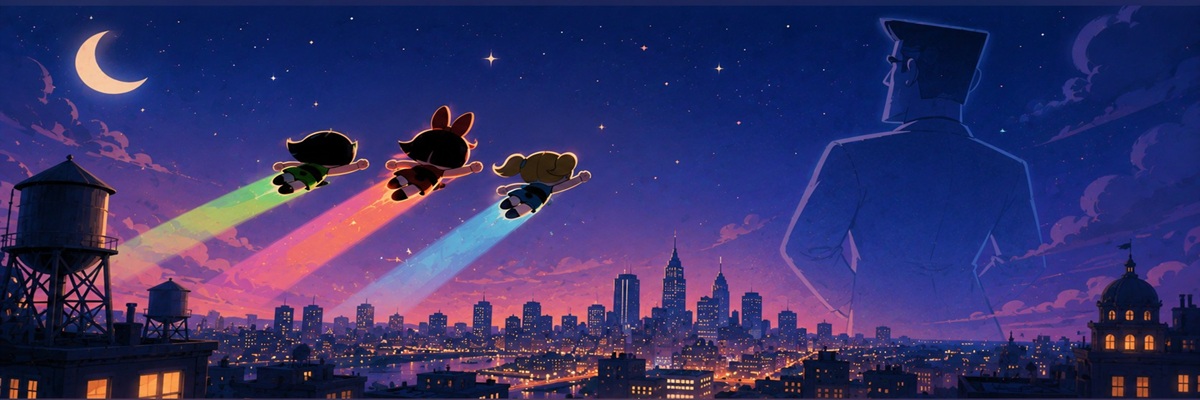
Few animated series from the late 1990s remain as instantly recognizable as The Powerpuff Girls. Decades after its original debut on Cartoon Network, the series continues attracting new audiences through streaming platforms while longtime fans still revisit it with deep nostalgia. The show’s visual identity, explosive humor, and superhero chaos helped define an era of television animation, but one of its greatest strengths came from something audiences could not see.
The voices behind the characters became inseparable from the franchise itself.
Interest in the original cast recently resurfaced after several voice actors reunited publicly years after Tom Kane suffered a stroke in 2020. Following Kane’s passing, many fans once again reflected on how important the original performers were to the emotional identity of the series. What began as a quirky superhero parody eventually evolved into one of the most influential animated franchises of its generation, powered heavily by a voice cast that helped shape modern animation history.
The original series also gained renewed attention as audiences continued debating reboot attempts, streaming rediscovery, and why newer versions struggled to capture the same magic. More than twenty-five years later, The Powerpuff Girls still stands as one of the clearest examples of how voice acting chemistry can define an animated show for decades.
The Powerpuff Girls Changed Television Animation in the Late 1990s
Created by Craig McCracken, The Powerpuff Girls officially premiered in 1998 during a period when Cartoon Network was rapidly building its identity through original programming. At the time, the animation landscape was already competitive, but the series immediately felt different from almost everything else on television.
The show blended minimalist character designs with explosive action, surreal humor, anime-inspired visual energy, superhero satire, and emotional sincerity. Its pacing was unusually fast for children’s television, and its comedy often worked on multiple levels simultaneously. That ability to communicate personality and ideas through animation also extends beyond entertainment, with formats such as animated explainer voice over relying on vocal performance to give animated visuals clarity, energy, and character.
Blossom, Bubbles, and Buttercup quickly became cultural icons.
Part of the show’s success came from its simplicity. The premise was straightforward: three kindergarten-aged superheroes protected the city of Townsville from monsters, criminals, and bizarre villains. Yet the series constantly experimented stylistically. Episodes shifted between comedy, action, horror parody, emotional storytelling, and complete absurdity without losing their identity.
The show also arrived during a period when female-led action cartoons were still relatively uncommon in mainstream Western animation. Blossom, Bubbles, and Buttercup were not side characters or supporting figures. They were the entire center of the franchise.
That mattered culturally.
The series became one of Cartoon Network’s defining brands, generating massive merchandise success, international popularity, theatrical releases, games, and countless reruns across multiple generations of viewers. Even audiences who never watched the show regularly still recognized the characters instantly.
Over time, The Powerpuff Girls also became one of the clearest examples of Cartoon Network’s creative peak era alongside shows like Dexter’s Laboratory, Johnny Bravo, Courage the Cowardly Dog, and Samurai Jack.
The Main Cast Created Three Distinct Characters That Still Feel Instantly Recognizable
The success of the series depended heavily on whether audiences emotionally connected with the three main characters. That responsibility fell largely on Cathy Cavadini, Tara Strong, and E.G. Daily, whose performances helped turn Blossom, Bubbles, and Buttercup into some of animation’s most recognizable personalities.
Each actress approached the role differently while maintaining believable chemistry between the sisters.
Cathy Cavadini gave Blossom a careful balance of leadership, intelligence, and occasional insecurity. Blossom could sound responsible and confident one moment, then emotionally overwhelmed the next. That emotional flexibility prevented the character from becoming too rigid or one-dimensional.
Tara Strong’s performance as Bubbles became one of the most iconic elements of the series. Bubbles could shift instantly between sweetness, innocence, emotional vulnerability, and sudden bursts of chaotic energy. Strong’s vocal range allowed the character to feel unpredictable without losing her emotional sincerity.
E.G. Daily approached Buttercup with aggression, sarcasm, and confidence. Buttercup’s personality often created tension within the group dynamic, but Daily’s performance kept the character charismatic rather than simply hostile. The vocal contrast between the three actresses helped every interaction feel energetic and natural.
Creating believable child characters in animation is far more difficult than it often appears. Performances can easily become repetitive, overly exaggerated, or emotionally flat over long-running series. The original cast avoided those problems because each actress built a distinct emotional identity for her character.
That individuality remains one reason audiences still connect so strongly with the original series decades later.
Fans can often identify the characters immediately from a single line of dialogue. Few animated casts achieve that level of vocal recognition.
The Supporting Cast Helped Shape the Show’s Entire Personality
While the main trio carried the emotional center of the series, the supporting cast helped transform The Powerpuff Girls into one of animation’s most memorable comedic worlds.
Roger L. Jackson’s performance as Mojo Jojo became legendary almost immediately. The character’s endless overexplaining, dramatic phrasing, and frantic energy turned him into one of the most recognizable cartoon villains of the era. Jackson’s vocal timing gave Mojo Jojo an identity so distinctive that many viewers still quote the character decades later.
Tom Kenny played both the Narrator and the Mayor, bringing wildly different energies to each role. The Narrator’s dramatic seriousness contrasted perfectly against the absurdity unfolding onscreen, while the Mayor embodied pure comedic chaos. Kenny’s performances became a major part of the show’s rhythm and pacing.
Jennifer Hale contributed to multiple roles, including Ms. Bellum, adding another highly respected voice actor to an already stacked cast ensemble.
Tom Kane’s performance as Professor Utonium, however, gave the series much of its emotional grounding.
Professor Utonium could have easily become a forgettable background character in a show filled with nonstop action and surreal humor. Instead, Kane gave the character warmth, sincerity, awkwardness, and genuine fatherly energy. His calm presence balanced the chaos surrounding the girls.
For many viewers, Professor Utonium represented stability inside the series. Kane’s voice carried kindness naturally, making the character emotionally believable even during the show’s strangest moments.
That emotional connection became particularly visible after Kane suffered a stroke in 2020 that affected his speech and ultimately led to his retirement from voice acting. When several original cast members later reunited publicly, fans responded emotionally because the performers had become deeply connected to childhood memories for an entire generation.
Following Kane’s passing, many audiences revisited the original series specifically to hear those performances again.
The Series Became an Early Gathering Place for Voice Acting Legends
One fascinating aspect of revisiting The Powerpuff Girls today is realizing how many legendary voice actors were assembled in one production.
At the time, most mainstream audiences did not closely follow voice actors by name. Streaming culture, social media, fan conventions, and online fandom had not yet fully transformed voice actors into publicly recognizable entertainment figures.
Looking back now, the cast feels almost unreal in hindsight.
Tara Strong later became one of the most prolific voice actors in modern animation through projects including Teen Titans, Ben 10, My Little Pony, and numerous DC productions.
Tom Kenny became globally iconic as SpongeBob SquarePants while continuing extensive work across television animation.
Jennifer Hale became one of gaming’s most respected performers through Mass Effect, Marvel projects, and countless animated productions.
Roger L. Jackson simultaneously became famous as the voice of Ghostface in the Scream franchise.
E.G. Daily remained closely associated with Rugrats and multiple other animation classics.
Tom Kane later introduced an entire generation of viewers to Yoda through Star Wars: The Clone Wars.
In retrospect, The Powerpuff Girls feels like a gathering point for some of the most influential voice talent of the era before audiences fully appreciated how significant those careers would become.
Why Later Reboots Struggled to Capture the Same Chemistry
The franchise’s enormous popularity made future revival attempts almost inevitable.
Cartoon Network rebooted The Powerpuff Girls in 2016 with Amanda Leighton, Kristen Li, and Natalie Palamides replacing the original trio. The recasting immediately became one of the most heavily discussed aspects of the reboot online.
Importantly, much of the criticism was not necessarily directed toward the new actresses themselves. Many fans instead felt the reboot fundamentally misunderstood the emotional chemistry and tone that made the original series work.
The humor style shifted noticeably. Dialogue felt more modernized and internet-driven. Some longtime viewers believed the emotional sincerity of the original series had been replaced with louder, faster comedic writing that lacked the same balance between heart and absurdity.
The absence of several original cast members also amplified those reactions.
Recasting iconic animated characters is always difficult because audiences often associate the voice itself with the character’s identity. In The Powerpuff Girls, that connection proved especially strong.
The reboot also faced backlash surrounding certain episodes and tonal decisions that fans felt drifted too far from the spirit of the original series. While the newer cast worked within the material provided, many viewers struggled to separate the franchise from the performances that originally defined it.
The franchise faced additional controversy when The CW attempted a live-action adaptation centered on an older version of the characters. Leaked script details and tonal choices generated immediate online skepticism, and the project ultimately collapsed before reaching series production.
These failed or divisive revival attempts demonstrated how difficult it can be to recreate the chemistry of a beloved animated series once audiences form strong emotional attachments to the original performances.
Streaming and Nostalgia Continue Keeping the Original Series Alive
Despite mixed reboot reactions, the original Powerpuff Girls series continues finding new audiences through streaming platforms and internet fandom.
Younger viewers continue discovering the show for the first time, while longtime fans regularly revisit it because the series still feels stylistically unique. The pacing remains sharp, the humor still lands surprisingly well, and the vocal performances continue carrying enormous personality.
Animation nostalgia has become a major force across modern entertainment, but not every franchise maintains long-term relevance equally. The Powerpuff Girls continues surviving because the original series possessed a very specific creative identity that remains difficult to imitate.
The visual style still feels distinctive. The humor still feels energetic. Most importantly, the cast performances still feel authentic.
That authenticity became even more visible after the cast reunion following Tom Kane’s health struggles and later after his passing. Fans were reminded how deeply connected they remained not only to the characters, but to the people who voiced them.
For many audiences, hearing those voices again instantly reconnects them to a specific era of childhood television.
That emotional durability is rare.
Animation trends continue evolving, streaming platforms continue changing, and studios continue revisiting older franchises searching for nostalgia-driven success. Yet the original Powerpuff Girls series still stands apart because its voice cast created something far more lasting than recognizable cartoon characters.
They created personalities audiences still feel emotionally attached to decades later.