
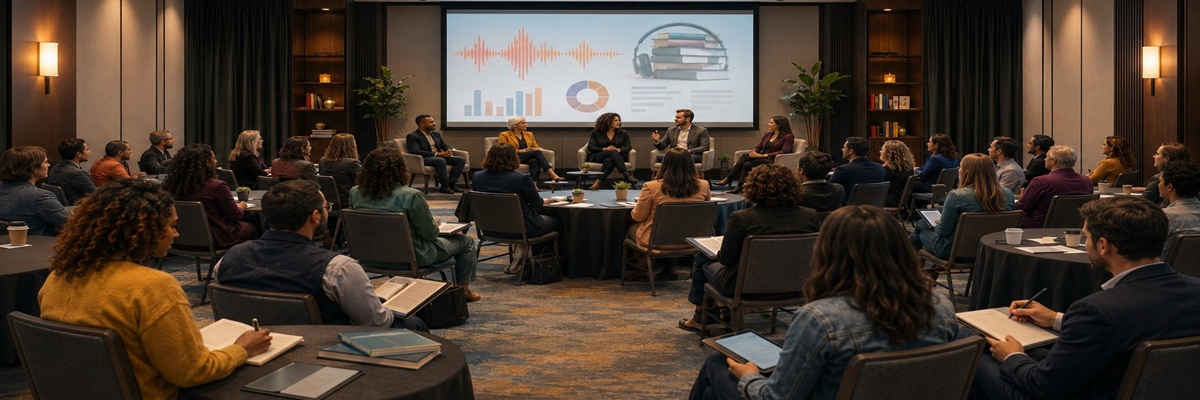
SAG-AFTRA audiobook performers gathered in New York earlier this year for two connected events focused on the future of audiobook narration and the recognition of standout work in the field.
According to SAG-AFTRA, more than 100 audiobook narrators attended a national meeting at the union’s New York local office on March 2, 2026. The meeting centered on bargaining priorities, contract concerns, and the issues affecting audiobook performers as the industry continued to change.
The gathering was followed by the Best Audiobook Narration Honors, which recognized notable work by audiobook performers and placed attention on a branch of voiceover that often receives less public visibility than animation, commercials, or video games.
Together, the events gave audiobook narrators a chance to discuss workplace protections while also celebrating the craft of long-form spoken performance.
Audiobook Performers Focused on Union Priorities
The New York meeting brought SAG-AFTRA audiobook performers together to discuss the professional issues shaping their work. The agenda included union protections, contract priorities, and the changing conditions surrounding audiobook production.
AI was one of the major concerns for performers. Audiobook narrators have been among the voice professionals most directly affected by synthetic voice technology because their work often involves hours of clean, expressive recorded speech. That kind of material has raised concerns about voice cloning, unauthorized use, and the possibility of synthetic narration replacing human performers without proper consent or compensation.
The meeting also reflected broader concerns about contracts and working conditions. Audiobook narration can involve long recording schedules, detailed preparation, vocal endurance, editing requirements, and performance consistency across many hours of material. For union performers, contract language helped define pay, protections, and expectations around how recorded performances could be used.
By gathering narrators in one place, SAG-AFTRA gave members a forum to discuss these issues collectively rather than individually. That mattered because audiobook performers often work alone in studios or home recording setups, making organized events important for sharing concerns and building professional unity.
Best Audiobook Narration Honors Recognized the Craft
Alongside the union-focused meeting, SAG-AFTRA also held the Best Audiobook Narration Honors. The event recognized outstanding audiobook performances and gave attention to narrators whose work helped bring books to life for listeners.
Audiobook narration has often required a unique mix of acting, vocal control, pacing, and storytelling skill. A narrator may carry an entire book alone, shifting between characters, maintaining emotional tone, and sustaining listener engagement over many hours.
The honors portion of the gathering helped place that work in the spotlight. While audiobook performers may not always receive the same mainstream recognition as on-screen actors or animated voice performers, their work has become increasingly important to publishing and audio entertainment.
The recognition also reflected the growing status of audiobooks as a performance medium. A strong narration can shape how listeners understand a book, how characters feel, and how emotional moments land. For many readers, the narrator becomes closely tied to the experience of the story itself.
By celebrating narration excellence, SAG-AFTRA highlighted both the artistic and professional value of audiobook performance.
Audiobook Narration Required a Specialized Skill Set
The events also underscored why audiobook narration occupied a distinct place within voiceover.
Unlike a commercial read, which may last 30 seconds, or an animated role built around short scenes, audiobook narration often required sustained performance over an extended recording period. Narrators had to manage pacing, vocal health, character consistency, and emotional continuity across entire books.
Fiction narration could require multiple character voices, internal monologue, dialogue shifts, and dramatic timing. Nonfiction narration demanded clarity, authority, and the ability to keep complex material engaging without distracting from the author’s words.
The work also required preparation. Narrators often reviewed manuscripts before recording, marked pronunciation challenges, tracked character details, and planned how to handle tone changes throughout the book. Even when the final performance sounded effortless, the process behind it involved discipline and careful control.
That specialized nature helped explain why SAG-AFTRA treated audiobook performers as a distinct professional community within the larger voiceover field.
Why the Gathering Mattered for Narrators
The March gathering gave audiobook performers more than a formal meeting. It created space for a professional community that often worked independently to discuss shared concerns.
For many narrators, the issues raised at the event went beyond individual jobs. AI protections, contract terms, compensation, and performer recognition all affected the long-term future of audiobook work.
The timing also mattered because audiobook production had continued expanding across publishing, streaming platforms, and digital distribution. As demand grew, performers faced both new opportunities and new pressures. Union meetings gave narrators a way to address those changes collectively.
The Best Audiobook Narration Honors added another layer by celebrating the creative side of the profession. The combination of advocacy and recognition made the gathering significant for performers who wanted both stronger protections and greater respect for the artistry involved in narration.
SAG-AFTRA’s New York events showed that audiobook narration had become an important part of the voiceover industry, not simply a side category within publishing. For the narrators who attended, the meeting and honors ceremony reflected a shared effort to protect the work, recognize the craft, and strengthen the professional community behind the voices listeners hear.