
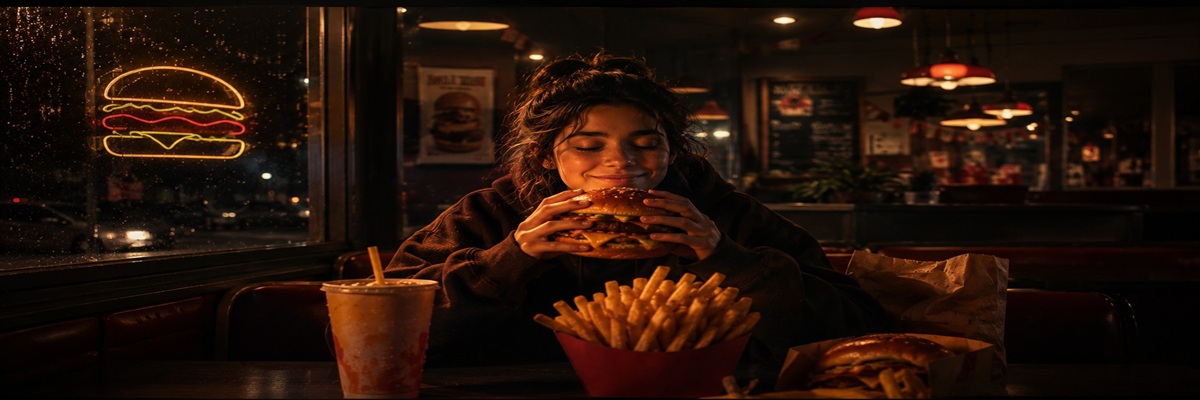
Fast-food commercials once followed a very rigid advertising formula. Food and beverage promotions throughout the 1980s, 1990s, and early 2000s relied heavily on polished announcer narration, upbeat pacing, oversized enthusiasm, and aggressively promotional language designed to dominate television commercial breaks. Every product sounded exciting, every limited-time offer felt urgent, and every voice actor was expected to project maximum enthusiasm.
That approach dominated restaurant advertising for decades because it matched the broader rhythm of television marketing during the era. Commercial breaks were crowded, viewers had fewer entertainment options, and brands competed intensely for attention through volume and repetition. Restaurant commercials rarely attempted subtlety or emotional complexity. Their primary objective was to create immediate recognition through speed, excitement, and exaggerated product presentation.
Modern restaurant advertising increasingly operates in the opposite direction.
Many fast-food commercials today intentionally sound awkward, emotionally flat, strange, or even mildly uncomfortable. Instead of relying on polished announcer delivery, modern campaigns sometimes use whisper narration, deadpan reactions, unnatural pauses, surreal humor, and intentionally restrained performances designed to disrupt audience expectations rather than satisfy them. The goal is no longer simply to sound appealing. Increasingly, the goal is to sound unusual enough that viewers instinctively stop ignoring the commercial.
Few restaurant brands embraced this strategy more aggressively than Burger King. Over the last two decades, the company evolved into one of the most experimental advertisers in the fast-food industry through campaigns built around bizarre visuals, awkward pacing, unsettling humor, and anti-commercial narration styles that often felt intentionally disruptive. In the process, Burger King also demonstrated how commercial voiceover changed alongside meme culture, internet humor, and the psychological realities of modern media consumption.
Earlier Restaurant Commercials Focused on Polished Narration
Fast-food advertising during the late twentieth century relied heavily on promotional clarity and emotional simplicity. Restaurant commercials emphasized pricing, meal deals, family dining, oversized food visuals, and product excitement while announcers delivered copy rapidly over upbeat music and fast editing. Narration was expected to sound clean, energetic, and emotionally straightforward because advertisers believed audiences responded best to confidence and familiarity.
Earlier Burger King campaigns reflected many of these broader industry traditions. Commercials built around slogans like “Have It Your Way” used recognizable announcer-style narration designed to sound upbeat, trustworthy, and commercially polished. Voice actors delivered copy with highly controlled pacing and strong projection while emphasizing customization, convenience, and menu variety through traditional promotional rhythms.
Much of this style originated from older television and radio advertising traditions where announcers were trained to sound authoritative and reassuring at all times. Commercial narration frequently borrowed techniques associated with broadcast promo work, where projection, vocal intensity, and rhythmic emphasis were viewed as essential tools for maintaining viewer attention. Restaurant commercials rarely experimented with emotional ambiguity because the industry generally prioritized consistency over creativity.
The performances themselves followed highly predictable structures. Viewers knew exactly what fast-food commercials were supposed to sound like, and advertisers intentionally reinforced those expectations. The narration sounded polished because polished advertising was associated with professionalism, reliability, and mainstream appeal.
As audiences became more exposed to internet culture and socially driven media environments, however, those older advertising techniques gradually became easier to ignore. Modern viewers developed a much stronger awareness of traditional commercial formulas, which meant polished announcer delivery no longer automatically guaranteed audience attention. Advertising slowly adapted by experimenting with narration styles that intentionally disrupted familiar viewing patterns.
Burger King became one of the first major restaurant chains willing to fully embrace that discomfort.
Burger King Turned Weirdness Into a Branding Tool
One of the biggest changes in modern restaurant advertising occurred when brands realized that memorability sometimes mattered more than comfort. Burger King leaned heavily into this idea through campaigns that often felt bizarre, awkward, surreal, or intentionally unsettling in ways traditional restaurant commercials would have avoided completely.
The company experimented with whisper narration, emotionally restrained performances, unsettling close-up visuals, anti-commercial pacing, and strange comedic timing designed to make audiences feel slightly uncomfortable while watching. These commercials frequently rejected the polished emotional reassurance historically associated with fast-food advertising and instead embraced unpredictability as part of the brand identity.
One of the clearest examples of this strategy appeared in Burger King’s famous Moldy Whopper campaign. Rather than presenting food in the glossy, idealized style traditionally associated with restaurant advertising, the commercial showed a Whopper decomposing over time while the narration remained calm and understated. The campaign intentionally violated decades of food-advertising convention because the discomfort itself became the mechanism for attracting attention.
The commercial succeeded precisely because it felt wrong.
Viewers accustomed to brightly lit burgers and polished announcer enthusiasm suddenly encountered imagery and pacing that felt emotionally unfamiliar inside fast-food advertising. The restraint of the narration made the visuals feel even more unsettling because the commercial refused to reassure audiences in the traditional way. Burger King understood that surprise and discomfort could generate stronger audience recall than polished promotional energy ever could.
Voiceover evolved directly alongside these visual strategies. Modern Burger King commercials often use emotionally flat narration, awkward pauses, anti-announcer pacing, and conversational performances that intentionally avoid sounding traditionally “commercial.” Instead of projecting nonstop excitement, many reads feel detached, strange, or unpredictably calm in ways designed to interrupt passive viewing behavior.
This style requires an entirely different kind of performance skill than traditional restaurant advertising. Earlier commercial announcers were trained to sound polished, authoritative, and emotionally clear at all times. Modern disruptive advertising frequently depends on controlled awkwardness, underacting, and vocal unpredictability instead. The narration succeeds because it feels emotionally unstable compared to the polished confidence viewers expect from restaurant commercials.
Several recognizable performers also contributed to Burger King’s evolving commercial identity over the years. Actor Paul Giamatti brought a conversational storytelling quality to Burger King campaigns that leaned into quirky humor rather than traditional fast-food hype. The company also experimented heavily with celebrity-driven performances and intentionally understated reads that felt closer to surreal comedy than classic restaurant advertising.
Even Burger King’s use of “The King” mascot reflected this broader embrace of discomfort-based branding. The character often appeared in strange or mildly unsettling situations while commercials leaned heavily into bizarre humor that divided audiences but generated enormous attention online. The company increasingly understood that audiences did not necessarily need to feel comfortable during the commercial. They simply needed to remember it afterward.
Strange Narration Works Because It Interrupts Audience Expectations
One reason strange commercial narration became so effective is that modern audiences are extremely skilled at ignoring traditional advertising. Years of exposure to polished commercials trained viewers to recognize standard advertising rhythms almost instantly. As a result, many people mentally tune out the moment a commercial begins sounding too familiar.
Disruptive narration interrupts that automatic filtering process.
Awkward pacing, whisper delivery, emotionally flat reads, or unusual silence force audiences to pay attention because the commercial no longer behaves the way viewers subconsciously expect advertising to behave. Human attention naturally reacts to unpredictability, particularly when communication patterns feel emotionally unusual or slightly uncomfortable.
Burger King commercials frequently rely on this psychological principle. Whisper narration creates intimacy while simultaneously making viewers uneasy because fast-food commercials are traditionally expected to sound loud and energetic. Emotionally detached delivery feels strange because audiences instinctively expect excitement from restaurant advertising. Silence creates tension because older commercials almost never allowed silence to exist at all.
These techniques function as psychological tools as much as creative decisions. Modern advertising exists inside an environment shaped by constant scrolling, content oversaturation, and shortened attention spans. In that environment, polished traditional commercials often become easier to ignore precisely because audiences have encountered those same rhythms thousands of times before.
Disruptive voiceover breaks passive viewing habits by introducing emotional unpredictability into spaces where viewers expect formulaic commercial behavior. This also explains why awkwardness and anti-humor became such powerful parts of meme culture and internet comedy more broadly. Online audiences frequently respond strongly to surreal pacing, emotionally detached reactions, and intentionally uncomfortable humor because those styles feel less predictable than polished mainstream entertainment.
Burger King adapted those internet rhythms directly into commercial advertising. The company’s campaigns increasingly sounded less like traditional fast-food commercials and more like strange internet content unexpectedly appearing during a television break. That unpredictability helped the brand stand out dramatically in a media environment where most advertising still relied heavily on familiar structures.
Meme Culture Reshaped Commercial Voiceover
The rise of internet humor fundamentally changed advertising language across multiple industries, but restaurant advertising adapted especially quickly because fast-food brands compete constantly for social engagement and online visibility. Modern meme culture frequently relies on awkward timing, deadpan reactions, surrealism, anti-humor, and emotionally restrained delivery styles that would have seemed commercially risky decades earlier.
Burger King became unusually comfortable experimenting inside that space.
The company’s commercials increasingly borrowed from internet-style humor because younger audiences instinctively recognized those rhythms through social media, short-form video content, and meme-driven entertainment. Commercial narration gradually became less polished, less authoritative, and intentionally less “professional” in the traditional sense because audiences increasingly associated overly polished advertising with corporate artificiality.
Other restaurant chains eventually adopted related techniques in different ways. Wendy’s embraced sarcasm and socially aware humor, Taco Bell leaned into surreal youth-culture aesthetics, and Jack in the Box frequently used absurdist comedy and self-aware narration. Burger King, however, became one of the clearest examples of discomfort itself becoming part of a brand’s advertising identity.
The company demonstrated that modern restaurant commercials no longer needed to sound safe, polished, or emotionally reassuring in order to succeed. Sometimes sounding strange created stronger audience recall than sounding traditionally appealing.
Modern Restaurant Advertising Prioritizes Memorability Over Polish
Restaurant advertising still depends heavily on voiceover because narration shapes emotional perception, but the role of commercial narration changed dramatically over time. Earlier fast-food commercials aimed to sound polished, upbeat, trustworthy, and universally appealing. Modern advertising increasingly values disruption, memorability, and emotional unpredictability instead.
Burger King’s evolution demonstrates how far commercial voiceover moved away from traditional announcer culture. Earlier campaigns relied heavily on clean promotional delivery and familiar advertising rhythms, while modern campaigns embraced awkward realism, whisper narration, bizarre pacing, and anti-commercial performance styles designed to interrupt audience expectations.
This transformation reflects larger changes happening across entertainment, internet culture, and media consumption itself. Modern audiences encounter enormous amounts of content every day, which means familiarity often becomes invisible. Commercials that sound too predictable or emotionally safe are easier to ignore because viewers instinctively recognize the patterns already.
In that environment, weirdness became a competitive advantage.
Modern restaurant advertising increasingly succeeds not because it sounds polished, but because it sounds different enough that audiences instinctively stop scrolling, stop multitasking, or stop ignoring the commercial entirely. Burger King helped demonstrate how powerful that disruption could become when a brand fully embraced discomfort, unpredictability, and strange narration as central parts of its commercial identity.