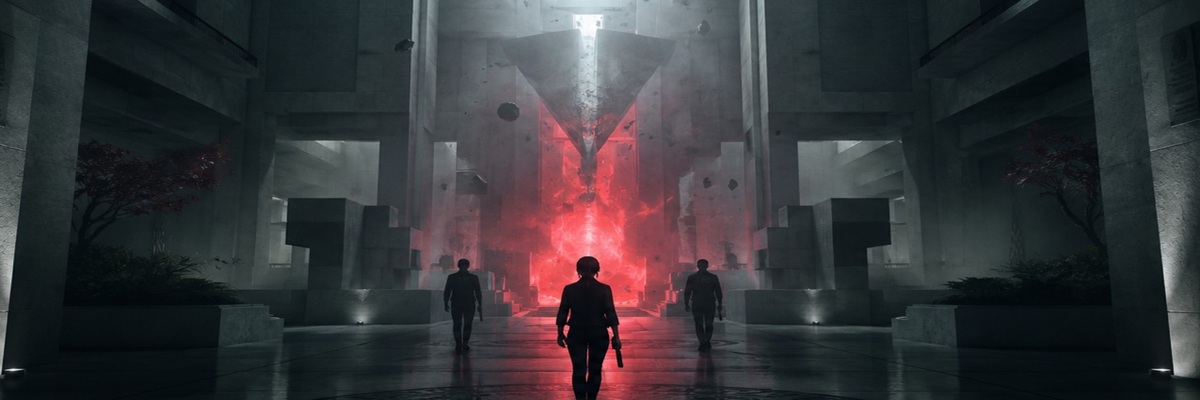
A newly released Russian-language trailer for Control Resonant has put fresh attention on the role of voice performance in Remedy Entertainment’s next major release. The trailer, produced by GamesVoice, features Russian dubbing for the upcoming game and brings back five actors from the group’s previous localization of Control. GamesVoice made clear that the video is not a formal announcement of a full Russian dub, but the return of familiar performers has already made the trailer notable for players who followed the original game’s localized release.
That distinction matters because Control Resonant is not arriving as a small follow-up to a cult favorite. Remedy is preparing the game as the next major chapter in one of its central franchises, with a worldwide release set for September 24, 2026, on PlayStation 5, Xbox Series X|S, and PC. The original Control has now passed 6 million copies sold, giving the sequel a larger audience, a more visible launch window, and greater expectations around how its world, characters, and performances will continue.
For a voice-over audience, the GamesVoice trailer is interesting less as a localization announcement and more as a reminder of how strongly players attach voices to game identity. Even when a dub is produced outside the original English-language release pipeline, fans still recognize continuity. If a supernatural world like Control depends on mood, tension, and character presence, then voice acting becomes one of the main ways that continuity survives across sequels, trailers, and local markets.
GamesVoice Brings Familiar Voices Back to Control
GamesVoice presented the dubbed Control Resonant story trailer as a short showcase rather than a confirmed full project. The studio said five actors from its earlier Control localization returned to their roles for the clip and suggested that they could return more fully if the team takes on the project. However, GamesVoice also stated that it had not officially announced or promised a complete localization for the game.
That cautious wording is important. It avoids overstating the news while still showing that the group sees Control Resonant as a natural candidate for Russian voice work. GamesVoice has already shown interest in Remedy’s universe through earlier dubbed trailer work, and previous materials publicly highlighted familiar Russian voices including Nikolai Bystrov and Tatyana Abramova. For the new trailer, though, the safest confirmed point is that five returning performers were involved, without treating every role as publicly identified.
The trailer also shows how fan-facing localization groups can build continuity around voice casts. For many players, a returning voice is not just a technical detail. It signals that a character’s emotional history is being carried forward. That matters even more in a game like Control, where atmosphere, psychological tension, and strange institutional mystery are central to the experience.
Control Resonant Arrives With Bigger Franchise Expectations
Remedy is entering the Control Resonant launch with a stronger commercial foundation than it had when the original game arrived in 2019. The first Control has now crossed 6 million lifetime sales, a major milestone for a story-driven action game with an unusual tone and setting. That success gives the sequel a clearer place within Remedy’s long-term plans and makes every creative choice around performance, sound, and localization more visible.
The new game shifts the focus to Dylan Faden, whose connection to Jesse Faden and the Federal Bureau of Control was a major part of the original story. Remedy has described Control Resonant as a larger experience that can welcome both returning fans and newcomers, while still expanding the strange world that made the first game stand out. That balance makes voice direction especially important, because the game has to reintroduce its world without losing the unsettling personality that returning fans expect.
The timing also places Control Resonant in a busy release environment. Remedy CEO Jean-Charles Gaudechon has addressed the challenge of launching near a year dominated by Grand Theft Auto VI, framing it as a long-term opportunity rather than a direct fight for attention. His comments about Remedy needing a distinctive voice are especially fitting here. For Control Resonant, that voice is not only about marketing language. It is also about the way characters sound, how the world speaks, and how the game keeps its identity recognizable across languages.
Remedy’s Human-Centered Approach Supports the Performance Angle
Remedy has also been discussing the creative philosophy behind Control Resonant, including its approach to music, design, and generative AI. In recent interviews, the studio emphasized that the game is being shaped by human creative teams, with developer Sergey Mohov saying the decision to avoid generative AI was a natural one for a project built around Remedy’s own creative identity.
That point gives the GamesVoice trailer extra relevance for voice-over readers. The broader industry is still debating how AI tools will affect performance, localization, and game production. Remedy’s position on Control Resonant reinforces the value of human creative work in a project where tone and atmosphere are not interchangeable. Voice acting is part of that same equation, especially in a series where uncertainty, fear, dry humor, and emotional instability all need to land through performance.
This does not mean the GamesVoice trailer should be treated as part of Remedy’s official localization plan. It should not. But it does show how audiences respond when a known voice identity returns to a familiar world. Whether produced by a developer, a publisher, or a dedicated localization group, strong voice continuity can make a sequel feel connected before players ever touch the controller.
Why This Trailer Matters for Voice Acting
The Control Resonant trailer is a small piece of news, but it points to a larger reality in modern game performance. Players now follow voices across releases, dubs, remasters, sequels, and trailers. They notice when a character sounds familiar, and they notice when a performance changes. That gives voice actors and localization teams a stronger role in how franchises maintain trust with their audiences.
For Control Resonant, Remedy already has the advantage of a world that sounds unlike most mainstream games. Its mix of paranormal horror, bureaucratic strangeness, and personal trauma depends heavily on how characters speak and react. The return of familiar localized voices in the GamesVoice trailer suggests that this identity has reached beyond the original English-language production and become part of how international fans remember the series.
As the September 2026 release approaches, the official cast and localization details will likely receive more attention. For now, the GamesVoice trailer serves as an early reminder that Control Resonant is not only being watched for its gameplay and story. It is also being listened to, and for a franchise built on atmosphere, that may be one of its most important strengths.