
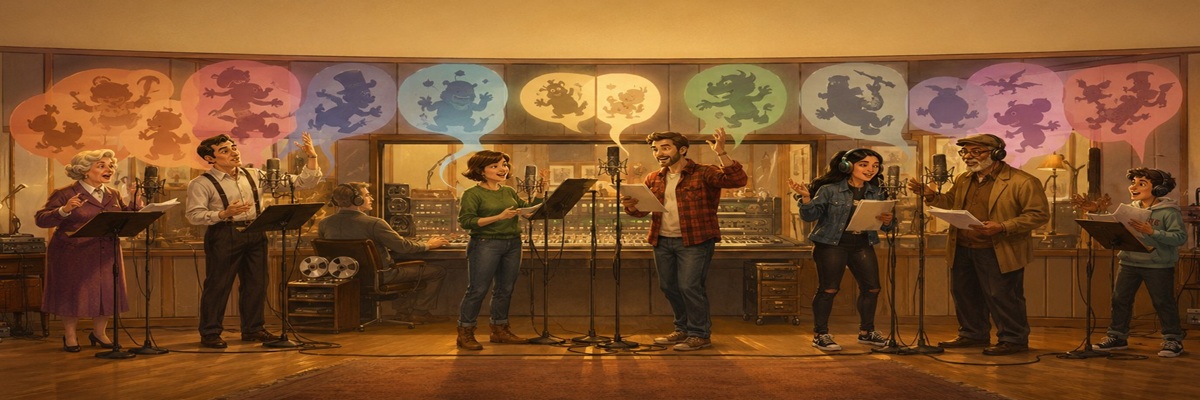
Most people can instantly recognize cartoon characters they grew up with. A single catchphrase, laugh, or line of dialogue can bring back memories from decades ago. Characters such as Charlie Brown, Bugs Bunny, Dexter, Minnie Mouse, and countless others remain part of popular culture long after their original shows first aired.
What many viewers cannot recall quite as easily is the name of the person behind the microphone.
Voice actors occupy a unique place within the entertainment industry. Their work reaches millions of people, yet they rarely experience the same level of public recognition as on-screen actors. Fans may spend years listening to a performer without ever seeing their face. While the characters become famous, the people who helped create them often remain largely invisible.
That raises an interesting question: what happens after the hit show ends? What becomes of the performers who gave life to some of animation’s most beloved characters?
The answer reveals a side of the entertainment industry that many viewers never see.
Why Voice Actors Experience a Different Kind of Fame
For most actors, visibility is directly tied to recognition. Audiences see their faces on screens, in interviews, on red carpets, and in advertising campaigns. Voice actors typically operate under a different set of circumstances.
Their performances are heard everywhere, but they are rarely recognized in public. A performer might voice several iconic characters and still walk through an airport, restaurant, or convention center without attracting attention.
This type of career offers advantages. Many voice actors enjoy a level of privacy that traditional celebrities often lose. At the same time, it can create misconceptions about how the industry works. Viewers sometimes assume that anyone associated with a successful cartoon automatically enjoys lifelong financial security and widespread fame.
The reality is far more complicated.
Voice acting is largely a freelance profession. Most performers spend their careers moving from project to project, auditioning continuously and competing for new opportunities. Even successful actors frequently face uncertainty between roles.
Unlike the characters they portray, careers do not continue indefinitely simply because a show remains popular in reruns.
When the Cartoon Ends
One of the biggest differences between voice acting and traditional employment is the lack of permanence.
A successful series can run for years before eventually concluding. Once production stops, performers often find themselves returning to the same challenge faced by countless freelancers: finding the next opportunity.
This reality has affected performers throughout animation history.
Christine Cavanaugh became one of the most recognizable voices of the 1990s through roles such as Chuckie Finster in Rugrats and Dexter in Dexter’s Laboratory. Her performances helped define two major animated franchises. Yet despite that success, she eventually stepped away from acting and largely withdrew from public life.
Joe Alaskey became beloved for carrying on the legacy of classic Looney Tunes characters, including Bugs Bunny and Daffy Duck. He earned tremendous respect within the industry, but like many voice actors, his name remained far less recognizable than the characters he portrayed.
These examples are not unusual. They simply reflect the reality that animation careers often operate behind the scenes, away from the level of public attention enjoyed by many film and television stars.
The Financial Side of Animation Careers
Another common misconception involves money. Fans often assume that working on a successful cartoon automatically guarantees long-term financial stability. While voice acting can be rewarding, the profession is not immune to the challenges that affect many creative careers.
Income can vary dramatically from year to year. Some projects provide residual payments, while others operate under different compensation structures. Opportunities can fluctuate based on industry trends, casting preferences, and the availability of new productions.
Many animation voice actors supplement their work through multiple revenue streams. Commercials, video games, audiobooks, convention appearances, teaching, directing, writing, and coaching frequently become important parts of a sustainable career.
This entrepreneurial approach has become increasingly common across the entertainment industry. Rather than relying on a single role or project, successful performers often build diverse professional portfolios.
The public usually sees the finished cartoon. They rarely see the business decisions and financial planning required to maintain a long-term career.
Why Fan Conventions Changed Everything
One of the biggest developments in modern voice acting has been the growth of convention culture.
For decades, audiences often had little opportunity to meet the performers behind their favorite characters. The expansion of comic conventions, animation events, gaming expos, and fan gatherings changed that dynamic significantly.
Today, fans regularly attend panels featuring voice actors from beloved cartoons, anime series, and video games. These events allow audiences to hear stories about the creative process while giving performers a direct connection to the people who appreciate their work.
Conventions have also helped increase public awareness of voice acting as a profession. Many fans who once knew only the characters now recognize the performers responsible for bringing them to life.
For some actors, these appearances have become meaningful additions to their professional lives. They provide opportunities to celebrate past projects while remaining connected to audiences years after a show’s original run.
The growth of social media has expanded those connections even further, allowing performers to engage directly with fans around the world.
The Voices That Shaped Generations
Animation history is filled with performers whose contributions continue to influence audiences long after their work was recorded.
Mel Blanc helped establish the foundation of modern character voice acting through his legendary work with Looney Tunes. His performances created personalities that remain recognizable around the world.
June Foray became one of animation’s most respected pioneers, contributing to countless productions and helping demonstrate the creative possibilities of voice performance.
Russi Taylor spent decades voicing Minnie Mouse while also contributing memorable performances to The Simpsons and numerous other projects. Her work connected multiple generations of viewers to some of animation’s most enduring characters.
Peter Robbins became the first voice of Charlie Brown, helping define one of the most recognizable characters in American animation history. Decades later, audiences still associate his performance with the beloved holiday specials that continue to air each year.
These performers came from different backgrounds, worked in different eras, and voiced very different characters. What they shared was the ability to create emotional connections that lasted far beyond the original productions.
Appreciating the Artists Behind the Characters
Cartoon characters often feel timeless. They remain available through streaming platforms, home video collections, television broadcasts, and digital archives. New generations continue discovering stories that first appeared years or even decades earlier.
The performers behind those characters, however, are real people navigating careers, families, professional challenges, and changing industries.
While audiences naturally form attachments to animated heroes, villains, sidekicks, and mascots, it is worth remembering the artists who gave those characters their personalities. The laughter, warmth, excitement, and emotion that viewers remember did not happen by accident. They came from talented performers whose work frequently remained hidden behind the animation itself.
The next time a familiar cartoon voice triggers a childhood memory, it may be worth taking a moment to learn about the person behind it. Their story is often just as interesting as the character they helped create.