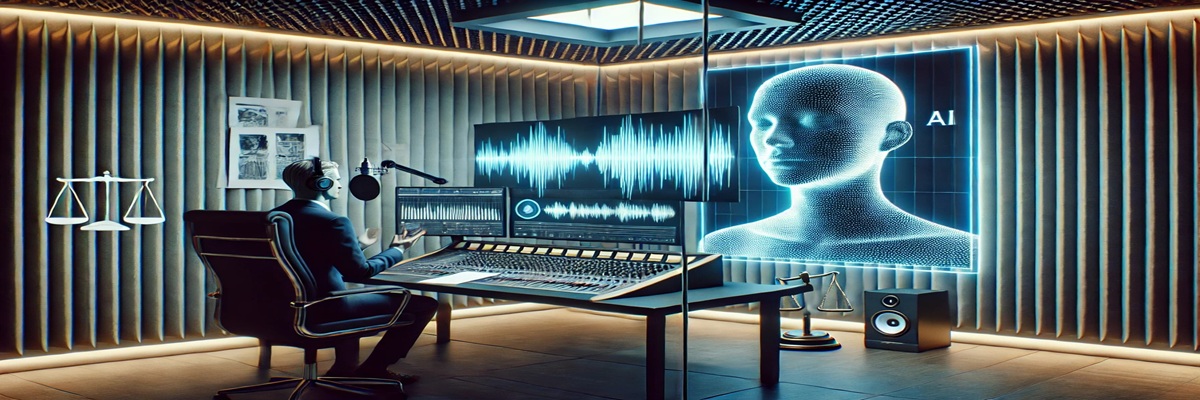
A lawsuit unfolding in New York could become a landmark case in how the law treats AI-generated voice clones. Filed by two professional voice actors, the case alleges that an AI voice startup used their voices without permission to create and sell synthetic replicas—raising first-of-its-kind questions about identity, consent, and control in the age of machine learning.
At the center of the case are plaintiffs Bev Standing and Linnea Sage, both established voiceover artists. According to the complaint, the defendants used samples of their voices to develop synthetic voice models sold to third parties. The lawsuit alleges this was done without a license or consent, violating their publicity rights, misleading consumers, and potentially causing long-term damage to their professional reputations.
This case taps into a broader cultural and legal reckoning with generative AI—particularly in the entertainment and media industries, where cloning likenesses and voices can be done quickly and at scale. Until now, most lawsuits have involved AI-generated images or text. Voice, however, occupies a more personal and commercially sensitive space, especially for working voice actors.
The Legal Gaps Around Voice Cloning
Unlike visual likeness, which is often covered under well-established right-of-publicity laws, voice rights occupy a murkier space. There is no single federal statute in the U.S. that explicitly protects a person’s vocal likeness, and protections vary significantly from state to state.
In New York, where the case was filed, recent amendments to civil rights law added digital replica protections—but whether those protections fully apply to voice is now being tested.
Legal experts suggest this case could help define how far AI developers can go in training on publicly available voice samples—like podcast appearances, demo reels, or commercial work—without triggering liability.
The Tech Behind the Controversy
At the heart of the lawsuit is a common AI training practice: scraping publicly available content to train generative models. In this case, the plaintiffs allege that voice samples—possibly drawn from commercial demos or content they recorded for other projects—were ingested by a text-to-speech engine to create synthetic voices for commercial use. According to court documents, the AI-generated clones were then marketed under different names and made available for developers or content creators to license.
While the company behind the voice cloning has not publicly admitted wrongdoing, this case illustrates a persistent blind spot in generative AI development: **the ethical and legal gray area of using real human data without explicit agreements**. Some AI companies attempt to sidestep responsibility by arguing that voice models are trained on “de-identified” or publicly available audio, but the line between inspiration and imitation becomes especially blurry when the end result sounds unmistakably like a known performer.
Bev Standing is no stranger to this terrain. In 2021, she made headlines after filing a similar complaint against TikTok, claiming the app used her voice in its default text-to-speech feature without her consent. That case was reportedly settled privately, but it sparked widespread conversation about performer rights in digital platforms—and this latest lawsuit could push those conversations into a courtroom.
What’s at Stake for Voice Actors
For professional voice artists, this lawsuit touches on an existential concern: What happens when your voice—the tool of your trade—can be copied, manipulated, and sold without your permission?
Voice actors spend years developing vocal range, character nuance, and performance instinct. Their work isn’t simply about reading lines—it’s about infusing scripts with emotion, personality, and tone that machines still struggle to replicate. But as AI cloning grows more advanced, actors now fear losing not only new job opportunities, but also ownership over the very performances they’ve already recorded.
The case also highlights the practical challenge of enforcing protections in a global, tech-driven market. Even when local laws offer some level of digital likeness protection—such as California’s Civil Code Section 3344 or New York’s 2021 amendments to civil rights law—many voice cloning startups operate from jurisdictions with looser rules or no enforceable standards at all.
With deepfakes and synthetic voices now appearing in ads, podcasts, video games, and even audiobooks, voice actors are calling for a clear legal framework. Many are asking for mandatory opt-in consent, usage tracking, and compensation when synthetic voices are derived from human samples.
Union Action and Industry Response
In response to growing concerns about AI voice replication, **SAG-AFTRA** and other performers’ unions have stepped up advocacy efforts. The union has begun negotiating clauses in contracts that explicitly address AI usage, including voice cloning protections and compensation structures for digital replicas. They are also pushing for “digital voice rights” to be treated with the same seriousness as image rights in the film and television industries.
Some AI companies have already taken steps to address consent, offering “opt-in only” training models or building tools that allow voice actors to license digital replicas of themselves on their own terms. However, critics argue that these practices are not yet the norm and often lack transparency.
Major platforms like Descript, ElevenLabs, and PlayHT have introduced customizable synthetic voice offerings, but they vary in how strictly they verify consent. A few platforms require voice actors to read a consent script as part of model training—while others rely on unclear user agreements or third-party datasets with murky provenance.
The lack of uniform regulation has led to widespread unease. Some performers now avoid posting voice samples online. Others watermark their audio files or mask their demos to prevent unauthorized scraping. These are defensive measures—stopgaps in a landscape that many feel is evolving faster than policy can keep up.
A Turning Point in Voice Ownership?
The outcome of this lawsuit could help define whether AI-generated voices are protected under existing intellectual property laws—or whether entirely new legislation is needed to keep pace with deep learning’s creative capabilities. It could also signal to other performers, producers, and AI developers that legal risk is rising when it comes to unauthorized vocal replication.
While the plaintiffs seek damages and removal of their cloned voices from public circulation, the wider implications are already being felt. For an industry built on nuance, expression, and identity, the rise of voice cloning is not just a technological disruption—it’s a fundamental challenge to what it means to own your voice.
Whether this case results in a landmark ruling or a quiet settlement, it’s a clear warning that the days of “ask forgiveness later” may be coming to an end. And for voice actors everywhere, it’s a moment to draw the line between innovation and exploitation.