
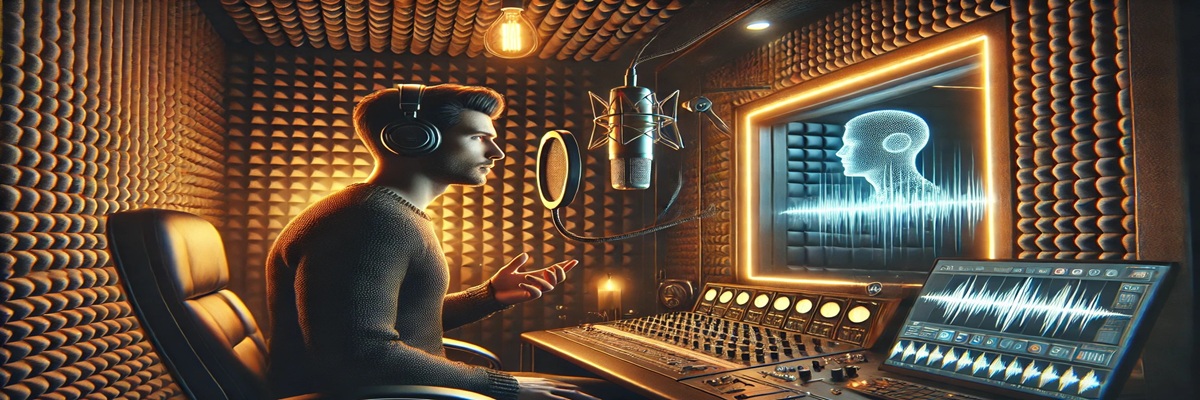
A Shifting Landscape in the Voice Industry
The voiceover profession is experiencing one of its most disruptive moments in decades. As artificial voice technology becomes more advanced, the opportunities for human performers are being squeezed by software capable of mimicking their tone, style, and delivery. What once took a skilled artist hours in the studio can now be generated in minutes by a program—sometimes using the artist’s own voice as a reference without their active participation.
The industry’s shift isn’t just a matter of efficiency; it’s a matter of identity and ownership. Many performers are concerned that their voices—integral parts of their creative identity—are being replicated without fair contracts or adequate safeguards. In an age where synthetic voices can be trained on relatively small samples, the boundaries of consent are under unprecedented strain.
The Allure and the Risk of AI Voices
From a business perspective, AI-generated voices are attractive because they reduce production costs and time. Studios, advertisers, and production houses can quickly create multilingual versions of a script, make last-minute edits, or adjust delivery styles without needing to rebook talent. For smaller projects, these tools can mean the difference between launching and shelving a product.
However, this convenience often comes at a cost to the people who have built their careers on live performance. While some performers are open to licensing their voices for controlled AI use, others fear that once their voice model is created, it could be reused or altered far beyond the scope of the original agreement—potentially for content they would never approve of.
Protecting the Craft and the Performer
Industry veterans stress that voiceover is more than simply reading words aloud—it’s the subtle interplay of timing, inflection, emotion, and nuance that makes a performance feel alive. AI can replicate the sound of a voice, but it struggles to reproduce the human instinct that shapes delivery in real time. Many fear that over-reliance on AI will lead to a homogenization of performance, where the individuality and unpredictability that make great acting memorable are lost.
Performers and advocacy groups are calling for stronger contractual protections to ensure that any use of a voice model is explicitly approved, properly compensated, and limited to agreed-upon projects. Without these measures, the industry risks eroding not only the livelihoods of its talent but also the creative richness of its output.
How Performers Are Adapting
Rather than resisting technology entirely, some voice artists are seeking ways to integrate AI into their work without losing control over their craft. This includes negotiating contracts that allow for limited AI use under strict conditions, offering their own curated voice models for approved projects, and working with trusted production teams to maintain quality oversight. These arrangements aim to ensure that technology becomes a tool that expands opportunity rather than a force that replaces the human element.
Some actors are also diversifying their skills to remain competitive. By developing specialties such as character voice design, live event narration, and interactive performance for games or immersive experiences, they are carving out areas where human improvisation and adaptability remain irreplaceable. Others are creating personal audio brands, ensuring their voice is recognized and sought after for its uniqueness rather than easily substituted by an algorithm.
One of the loudest demands from the voiceover community is for transparent, enforceable standards that protect against unauthorized cloning and misuse. Proposed measures include voice copyright recognition, mandatory consent forms for AI training, and standardized compensation models for synthetic use. Many believe that without codified protections, the market will continue to favor speed and cost-cutting over fair treatment.
Industry groups are pushing for these protections not only at the contract level but also through broader legislation. By advocating for laws that define voice rights in the same way likeness rights are recognized for on-screen performers, they hope to close legal gaps that have left many vulnerable to exploitation.
Despite the tension, there is growing interest in hybrid workflows where AI complements rather than competes with human performance. For example, AI could assist in early-stage production by generating placeholder dialogue, translating scripts into multiple languages, or creating alternate takes for testing. Once the structure is in place, human actors can refine, adapt, and infuse the final product with the emotional depth and cultural authenticity that machines cannot replicate.
Such models have the potential to streamline production while preserving artistry. The key lies in keeping performers involved in every stage where their voice is used, ensuring they have both creative input and contractual security. This collaborative approach could set a precedent for other creative industries navigating the balance between human skill and automated tools.
The Cultural and Creative Stakes
While technology will continue to reshape the voiceover industry, there remains an irreplaceable cultural value in human performance. Voices are more than just sound—they carry lived experiences, cultural nuance, and a deep connection to emotion that can’t be fully replicated by algorithms. When a performance resonates with an audience, it’s often because the actor has drawn from personal moments, unique perspectives, or improvisational instincts that technology cannot mimic.
For audiences, that authenticity matters. Even casual listeners can sense the difference between a performance that’s been carefully crafted by a skilled actor and one that’s been generated by code. This is why, despite advances in artificial voice tools, the demand for genuine, human-driven storytelling is unlikely to vanish.
Building a Sustainable Future for the Craft
Looking ahead, the industry’s challenge will be to create an environment where innovation and artistry coexist. That means establishing contractual frameworks, ethical guidelines, and perhaps even licensing systems that safeguard performers’ rights while allowing creators to explore new technological possibilities.
Education will also play a role—both for performers learning how to protect and market their voice in a changing environment, and for audiences becoming more aware of the origins of the voices they hear. The more transparent the process becomes, the easier it will be to foster respect for the artists behind the work.
Why the Human Voice Endures
At its core, voiceover is about connection. It’s about making a listener feel something—laughter, fear, joy, hope—through nothing more than the sound of a voice. This connection has been part of storytelling for as long as humans have existed, from ancient oral traditions to the latest animated films and audio dramas. Technology may transform the tools we use, but the essence of that connection remains uniquely human.
As the industry continues to evolve, those who find ways to integrate new tools without losing sight of this truth will define the next era of voiceover. It’s a future where technology serves the craft, not the other way around—and where the artistry of the human voice still leads the way.