
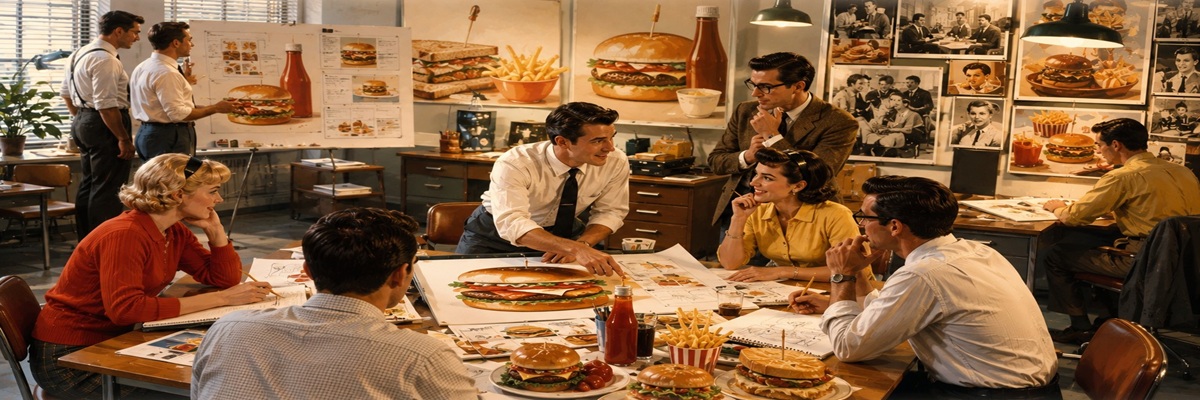
Few fictional advertising pitches have had a second life quite like Mad Men’s “Pass the Heinz.” In Season 6 of the series, Don Draper presents a deceptively simple idea to Heinz: show foods that clearly need ketchup, but never show the ketchup bottle itself. The pitch is elegant, confident, and risky. Instead of placing the product front and center, it trusts the audience to feel the absence of Heinz before anyone says the brand name.
In the show, the Heinz executives reject the idea. They want to see the bottle. They want the product visible. They want the comfort of traditional advertising. That rejection made the scene memorable because it captured a tension that still exists in commercial work today. Some brands want to explain everything. Others have enough recognition to let the audience complete the thought themselves.
Years later, Heinz did something unusual. In 2017, the company brought the fictional “Pass the Heinz” campaign into the real world with agency David Miami. The ads recreated the spirit of the Mad Men pitch almost directly, using images of foods that seemed incomplete without ketchup. Matthew Weiner, creator of Mad Men, approved the idea, and the campaign gave credit to the fictional Sterling Cooper Draper Pryce alongside the real agency behind the work.
It was more than a clever pop-culture stunt. It worked because Heinz is one of the few food brands recognizable enough to advertise by absence. The bottle did not need to appear because the audience already knew what was missing.
The Pitch That Started as Television Fiction
The Mad Men scene resonated with advertising fans because it felt like the kind of idea that could have existed in the real advertising world. Don Draper’s pitch was built around appetite, memory, and brand familiarity rather than product description. The images did not explain ketchup. They created a craving for it.
That concept fits perfectly with Heinz because the brand has long occupied a special place in food advertising. Ketchup is not complicated. Most consumers already understand the product. The challenge for Heinz has rarely been explaining what ketchup does. The challenge has been reinforcing why people feel attached to Heinz specifically.
The fictional “Pass the Heinz” campaign understood that difference. By showing fries, burgers, or steak without ketchup, the ads allowed the audience to supply the missing brand mentally. That made the viewer an active participant in the commercial idea. Instead of being told what to want, the audience felt the need before the message arrived.
This is why the real 2017 campaign felt so natural when Heinz finally launched it. The brand did not simply borrow from a television show for novelty. It revived an idea that matched decades of Heinz advertising logic.
Heinz Has Been Selling Anticipation for Decades
Long before Mad Men imagined “Pass the Heinz,” Heinz had already built some of its most famous advertising around anticipation. The classic 1970s campaign featuring Carly Simon’s “Anticipation” turned the slow pour of Heinz ketchup into a selling point. What could have been framed as a product inconvenience became part of the brand’s personality.
The message was simple: Heinz was worth waiting for.
That campaign worked because it did not fight the product’s physical quality. Thick ketchup poured slowly from glass bottles, and Heinz embraced that fact. The music, pacing, and visual storytelling created a small moment of suspense around something as ordinary as ketchup reaching a plate.
Some versions of the campaign relied heavily on music and visuals rather than conventional spoken narration. Others used familiar commercial voices to reinforce the idea, including spots associated with radio and voiceover legend Casey Kasem. The result was a campaign remembered less for a detailed product explanation and more for a feeling.
That feeling became part of Heinz’s brand identity. Waiting for the ketchup was not a flaw. It was a ritual.
This is where Heinz differs from many food brands. Its best advertising often begins before the product arrives. The commercial is not only about taste. It is about the expectation of taste.
Familiar Faces Helped Keep the Brand in Pop Culture
Heinz has also benefited from memorable performers and celebrity appearances across different advertising eras. One of the most widely discussed examples is Matt LeBlanc’s 1987 Heinz commercial, released years before he became famous as Joey Tribbiani on Friends. In the spot, LeBlanc plays a confident young man who times the slow pour of Heinz ketchup with casual precision, letting the bottle sit above a hot dog while he waits below.
The commercial is simple, but it works because of performance. LeBlanc’s charisma sells the joke as much as the ketchup does. The ad once again turns waiting into part of the entertainment. It is not loud, complicated, or over-explained. The performance carries the concept.
Decades later, Heinz found another natural performer in Ed Sheeran. His 2019 Heinz campaign leaned into his real-life affection for the brand, making the collaboration feel more personal than a typical celebrity endorsement. Sheeran had publicly expressed his love for Heinz ketchup before the campaign, and the commercial played on that authenticity by building the ad around his own idea and personality.
That campaign worked differently from the LeBlanc spot, but both relied on the same broader strength: Heinz could let the performer, the situation, and the audience’s familiarity with the brand do much of the work. The commercials did not need to explain ketchup. They needed to create a recognizable moment around it.
This has been one of the quiet strengths of Heinz advertising. The brand can use famous faces, music, minimalist images, or humor without losing its core identity because the product is already deeply familiar to audiences.
Why the Real Campaign Worked
When Heinz launched the real “Pass the Heinz” campaign in 2017, the idea worked on several levels at once. Fans of Mad Men recognized the reference immediately. Advertising professionals appreciated the unusual journey from fictional pitch to real campaign. General audiences did not need to know the television connection to understand the ads because the images were clear on their own.
The campaign also highlighted something rare about brand recognition. Most companies cannot remove their product from an ad and still expect audiences to understand the message. Heinz could. That level of familiarity is built over decades through packaging, taste memory, cultural presence, and consistent advertising.
The “Pass the Heinz” ads trusted the audience. That trust made the campaign feel confident rather than incomplete. In a media environment crowded with commercials explaining every product benefit, Heinz relied on absence, appetite, and recognition.
Voiceover and performance play an interesting role in that kind of advertising. Sometimes the strongest commercial work is not built around saying more. It is built around knowing how much the audience already understands. A performer in a Heinz commercial does not always need to create desire from nothing. The desire is often already there.
The Commercial That Understood What the Audience Already Knew
Heinz’s advertising history shows how powerful a simple idea can become when a brand understands its own place in popular culture. The 1970s “Anticipation” campaign made the slow pour memorable. Matt LeBlanc’s 1987 commercial turned timing into a performance. Ed Sheeran’s 2019 campaign made celebrity endorsement feel personal. The 2017 “Pass the Heinz” campaign transformed a fictional television pitch into real-world advertising because the idea fit the brand so perfectly.
That is why the Mad Men connection still feels more meaningful than a gimmick. The fictional campaign worked because it understood something true about Heinz. The product was already so familiar that audiences could recognize it even when it was missing.
For a brand, that is an extraordinary position to occupy. For commercial performers, advertisers, and viewers, it is a reminder that some of the most memorable campaigns are not built around explaining the obvious. They are built around creating the moment just before satisfaction arrives.
Heinz has spent decades making that moment feel like part of the product itself.