Ask someone to name a voice acting job and the answers are usually predictable. Most people think of animated characters, video game heroes, movie trailers, commercials, or perhaps audiobooks. These are the areas of the industry that receive the most attention from audiences and aspiring performers alike.
What many newcomers discover after entering the profession is that a significant portion of voiceover work happens far away from Hollywood productions, national advertising campaigns, and entertainment franchises. In fact, some of the most stable and consistently growing opportunities exist in sectors that most people rarely associate with voice acting at all.
Businesses, hospitals, museums, educational organizations, technology companies, and accessibility providers rely on professional voice talent every day. Millions of people interact with these recordings without ever considering the performers behind them. Yet these specialized areas have become important parts of the modern voiceover landscape, providing opportunities for talent with a wide range of skills and interests.
For voice actors looking beyond the industry’s most visible genres, these hidden markets often reveal a very different picture of what a professional career can look like.
Corporate Narration Powers Modern Business Communication
Most large organizations produce a constant stream of content designed to communicate with employees, customers, investors, and business partners. Recruitment videos, onboarding programs, internal announcements, brand films, investor presentations, and product introductions all require clear and effective communication.
This is where corporate narration enters the picture.
Unlike commercial voiceover, which is often designed to persuade consumers, corporate narration focuses on informing, educating, and guiding audiences. The performance must sound professional without becoming cold and authoritative without feeling intimidating.
Major companies such as Microsoft, Salesforce, Cisco, IBM, and countless others regularly produce narrated content for internal and external audiences. Many of these projects are never seen by the public, yet they represent a significant volume of work throughout the year.
The skills required are often different from those associated with entertainment voiceover. Corporate clients frequently prioritize clarity, consistency, and trustworthiness over dramatic performance. A voice actor may spend an entire project explaining complex concepts, introducing company initiatives, or helping employees understand new systems and procedures.
Because organizations continue expanding their digital communication efforts, demand for skilled corporate narrators remains strong across numerous industries.
Medical Narration Demands Precision and Credibility
Medical narration represents one of the most specialized areas of voiceover work. Hospitals, healthcare providers, pharmaceutical companies, medical device manufacturers, and educational institutions all rely on narration to communicate important information.
These projects can range from patient education materials and medical animations to physician training programs and pharmaceutical presentations. Some recordings are designed for healthcare professionals, while others help patients better understand treatments, procedures, and medical conditions.
The challenge lies in the level of accuracy required.
Medical narrators often encounter complex terminology, scientific concepts, and technical language that must be delivered clearly and correctly. Mispronunciations or inaccuracies can undermine the effectiveness of a project and create confusion for the audience.
At the same time, the performance must remain accessible. Patients receiving health-related information may already feel anxious or overwhelmed. A calm, reassuring voice can make difficult information easier to understand.
As healthcare systems continue investing in digital education and communication, medical narration has become an increasingly valuable specialty for voice actors who enjoy research, preparation, and attention to detail.
Museums and Cultural Institutions Need Storytellers
Museums have evolved significantly over the past few decades. What were once primarily collections of artifacts and informational placards have become immersive experiences designed to engage visitors through multiple forms of storytelling.
Audio guides, interactive exhibits, historical recreations, and multimedia presentations frequently rely on professional narration. Voice actors help bring historical events, artistic movements, archaeological discoveries, and cultural traditions to life for visitors from around the world.
The goal is rarely to deliver information alone.
Museum narration often focuses on creating connection. A skilled narrator helps audiences understand why a particular artifact matters, how it relates to a broader historical context, and what it reveals about the people who created or used it. The performance encourages curiosity while making complex subjects more approachable.
Major institutions such as the Smithsonian, the British Museum, the Art Institute of Chicago, and countless regional museums increasingly use professional narration as part of the visitor experience.
For voice actors who enjoy history, art, science, or cultural storytelling, museum projects can provide uniquely rewarding opportunities.
E-Learning Has Become a Massive Voiceover Market
Few sectors have expanded as rapidly as e-learning.
Organizations across virtually every industry now rely on digital training programs to educate employees, customers, and students. Corporate compliance courses, software tutorials, leadership training, professional certifications, and online learning platforms all require narration.
The shift toward remote work and online education accelerated this growth, but the trend was already underway long before those changes occurred. Businesses increasingly recognize that digital learning offers flexibility, scalability, and cost efficiency.
Modern e-learning has also become far more engaging than many people realize. Rather than relying solely on slide presentations and straightforward instruction, many training programs incorporate storytelling, scenario-based learning, interactive exercises, and character-driven content.
Voice actors play an important role in maintaining learner engagement. The narration must remain clear and informative while preventing content from feeling repetitive or monotonous. Strong pacing, conversational delivery, and audience awareness become essential skills.
As global organizations continue investing in workforce development, e-learning remains one of the most active areas of professional narration.
Audio Description Is One of the Fastest-Growing Specialties
One of the most important developments in modern media is the growing emphasis on accessibility. Audio description has become a vital service that allows blind and visually impaired audiences to enjoy films, television programs, streaming content, live performances, and other visual media.
Audio description narrators provide concise explanations of visual elements that occur between dialogue and important sound cues. These descriptions help audiences understand actions, settings, facial expressions, scene changes, and other details that might otherwise be inaccessible.
The work requires a unique combination of technical precision and storytelling awareness.
Narrators must communicate information efficiently without interfering with the original production. Timing is critical because descriptions must fit naturally into available spaces within the soundtrack. Clarity is equally important, as listeners rely entirely on the narration to understand visual details.
Streaming platforms have significantly increased demand for audio description services as accessibility standards continue evolving. Major entertainment companies now invest heavily in making content available to broader audiences.
For voice actors interested in work that directly improves access to media and information, audio description offers both meaningful impact and growing opportunities.
Some of the Best Voiceover Opportunities Happen Behind the Scenes
The voiceover industry is far larger than many people realize. While animation, games, commercials, and trailers often dominate conversations about voice acting, they represent only part of a much broader professional landscape.
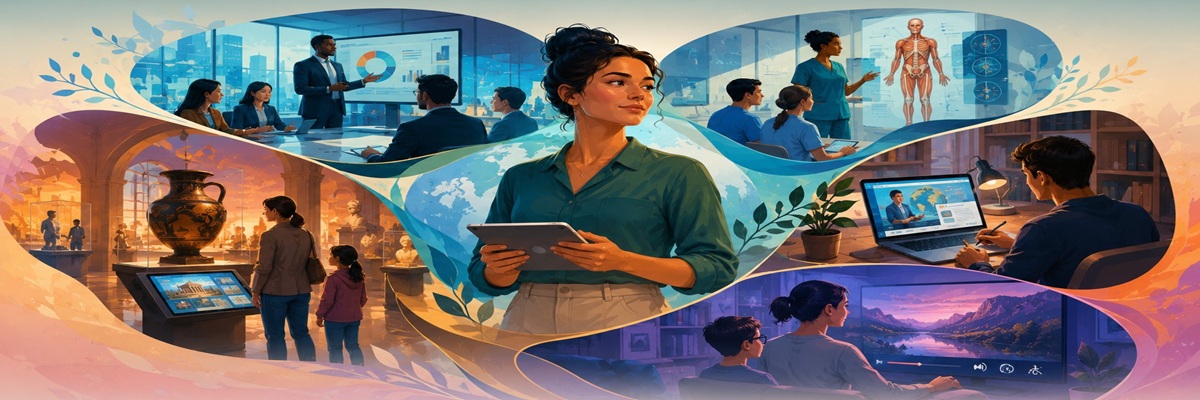
Corporate narration helps organizations communicate with employees and customers. Medical narration supports healthcare education. Museums use storytelling to connect visitors with history and culture. E-learning powers workforce training around the world. Audio description expands access to entertainment and information for millions of people.
Most audiences rarely notice the voices behind these projects, yet they encounter them every day. These specialized markets may not generate the same public attention as entertainment-focused genres, but they often provide consistent work, long-term opportunities, and meaningful ways to connect with audiences.
For aspiring voice actors, understanding these hidden corners of the industry can open doors that many newcomers never consider. Some of the most rewarding careers are built not on a single high-profile role, but on a collection of projects that educate, inform, guide, and support people in their daily lives.
The next great voiceover opportunity may not be found in a cartoon studio or a game booth. It might be waiting inside a hospital, a museum, a training platform, or an accessibility service, quietly proving that voice acting extends far beyond the places most people think to look.