
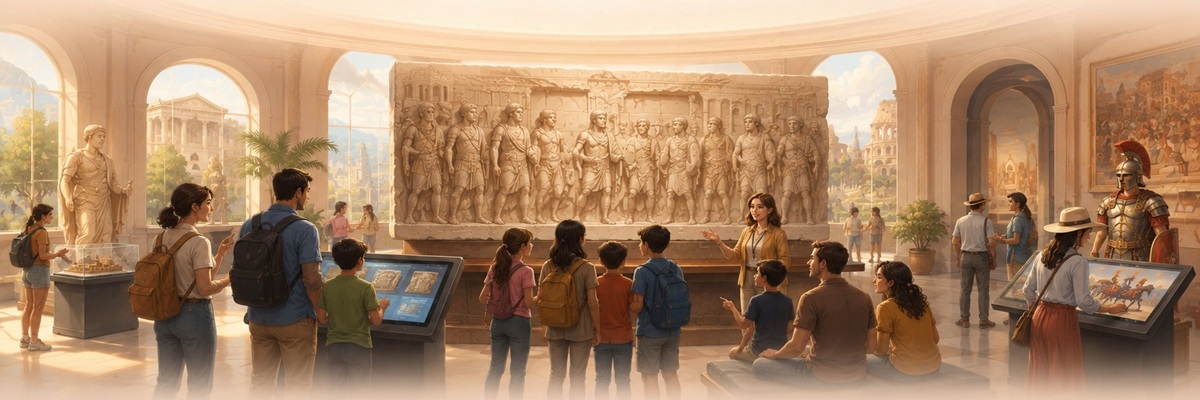
When people visit a museum, their attention is naturally drawn to the objects on display. Ancient sculptures, historical artifacts, paintings, manuscripts, and archaeological discoveries often take center stage. Behind the scenes, however, another element plays a significant role in shaping the visitor experience. It is an element many guests notice without fully thinking about it: the voice guiding them through the story.
Over the past two decades, museums have increasingly embraced audio tours, multimedia exhibits, mobile applications, and interactive experiences. These additions have transformed museums from places that primarily presented information into spaces designed to immerse visitors in history, art, science, and culture. Voice actors have become an important part of that transformation.
A recent example can be found in The Portus Relief: A Roman Story in Stone, a project produced by The Art Institute of Chicago. Narrated by Betsy Winchester and directed by Kirill Mazor, the presentation earned recognition during the 2026 awards season and serves as a reminder that voice actors are playing an increasingly important role in helping museums connect with modern audiences.
While museum narration rarely receives the same attention as animation, commercials, or video games, it represents one of the most fascinating areas of professional voiceover.
Museums Have Quietly Become a Voiceover Market
The modern museum experience looks very different from what visitors encountered a generation ago. Museums increasingly compete with streaming services, social media, video games, and countless other forms of entertainment for people’s time and attention. As a result, cultural institutions have sought new ways to make exhibits more engaging and accessible.
Audio tours were among the earliest examples of this shift. What began as simple recorded explanations has evolved into sophisticated storytelling experiences. Visitors can now access guided content through mobile devices, dedicated museum apps, and interactive exhibits that respond to their location within a gallery.
Many institutions have also expanded their reach beyond physical walls. Virtual exhibits, online collections, educational videos, and digital experiences allow people around the world to explore artifacts they may never see in person. These projects frequently rely on professional narration to help guide audiences through the material.
Voice actors contribute much more than information delivery. A skilled narrator can help establish atmosphere, create emotional connections, and maintain curiosity throughout an exhibit. The goal is not simply to explain what visitors are seeing. The goal is to help them understand why it matters.
This distinction has become increasingly important as museums seek to create memorable experiences rather than merely present facts.
A Roman Story Told Through Voice
The Art Institute of Chicago’s The Portus Relief: A Roman Story in Stone provides a strong example of how narration can elevate an educational experience.
The Portus Relief is a remarkable Roman artifact that offers insight into one of the ancient world’s most important port cities. Through detailed carvings and imagery, the relief reveals information about trade, transportation, and daily life during the Roman Empire. For museum visitors, however, understanding the significance of such an artifact often requires context.
That is where narration becomes essential.
Rather than asking audiences to interpret every detail independently, projects like this use storytelling to create connections between the object and the people who encounter it today. Historical facts become part of a larger narrative. Visitors are encouraged to imagine the world that produced the artifact rather than viewing it solely as an object behind glass.
Betsy Winchester’s narration helps facilitate that connection. Museum projects require a careful balance that differs from many other voiceover genres. The performance must be authoritative enough to inspire confidence, yet approachable enough to remain inviting. The narrator cannot overwhelm the subject matter, but must still provide enough personality to keep listeners engaged.
Achieving that balance is more difficult than it may appear.
A museum visitor may spend only a few minutes engaging with a particular exhibit. The narration must quickly establish credibility while maintaining interest. If the delivery feels too academic, audiences may disengage. If it becomes overly dramatic, it risks distracting from the artifact itself.
The most effective museum narration guides rather than dominates.
The Skills Behind Effective Museum Narration
Museum narration shares certain qualities with documentary storytelling, but it also presents unique challenges.
Clarity remains one of the most important skills. Visitors come from a wide range of educational backgrounds and levels of familiarity with the subject matter. The narration must be accessible to newcomers while still providing value to those with deeper knowledge.
Pacing is equally important. Unlike traditional documentaries, museum visitors control their own movement through an exhibit. Narration often needs to complement exploration rather than dictate it. The performer must create a rhythm that supports curiosity without rushing audiences through the material.
Tone also plays a critical role. Historical and cultural subjects frequently carry significant emotional and intellectual weight. Narrators must respect that importance without sounding detached or overly formal. The strongest performances create a sense of discovery that encourages audiences to remain engaged.
Atmosphere is another important consideration. Museum narration often helps establish a connection between visitors and people from distant places or time periods. Whether discussing ancient Rome, Renaissance art, or modern history, the voice serves as a bridge between the past and the present.
That bridge becomes most effective when the narration feels natural and conversational rather than performative.
Why Cultural Institutions Are Turning to Professional Voice Actors
The growing use of professional voice talent reflects broader changes occurring throughout the museum world.
Today’s visitors increasingly expect immersive experiences. Museums have responded by investing in technology, multimedia presentations, and interactive storytelling techniques designed to deepen engagement. Professional narration plays a central role in many of these efforts.
Accessibility is another major factor. Audio content helps make exhibits available to wider audiences, including visitors who may have visual impairments or those who prefer auditory learning experiences. High-quality narration improves both accessibility and overall visitor satisfaction.
Many institutions are also expanding multilingual offerings to serve international audiences. Professional voice actors provide the consistency and clarity needed to maintain quality across different languages and cultural contexts.
Digital initiatives have further increased demand. Museums now produce online exhibitions, educational resources, virtual tours, and social media content that frequently require narration. As cultural institutions continue extending their reach beyond physical galleries, voice actors are becoming increasingly important partners in the storytelling process.
This growth suggests that museum narration may become an even larger segment of the voiceover industry in the years ahead.
The Voices Behind the Visitor Experience
Visitors often remember a museum because of a particular artifact, painting, or exhibit. Just as often, however, what stays with them is the story attached to that object. The ability to transform information into an engaging narrative is one of the reasons voice actors have become such valuable contributors to cultural institutions.
Projects like The Portus Relief: A Roman Story in Stone demonstrate how narration can deepen understanding and create meaningful connections between audiences and history. Through performances that balance clarity, curiosity, and respect for the subject matter, voice actors help museums fulfill one of their most important goals: making knowledge accessible and memorable.
Betsy Winchester’s work on the project highlights a genre of voiceover that rarely receives widespread attention but quietly influences how people experience culture, art, and history. Museum visitors may not always remember the name of the narrator guiding them through an exhibit, but they often remember the feeling of being transported into another world.
That ability to bring stories to life is what makes museum narration one of the most rewarding and impactful forms of voiceover work.